booksbriefs
14:13in productionCh. 1 · The merry war/ 14:13 · ceiling 15 min
Drama

Much Ado about Nothing

William Shakespeare · 1600 · 160 pages → 14 min 13 s

Two people who cannot stop talking are tricked into love, while two who barely speak are nearly destroyed by a rumour.

Beatrice and Benedick argue their way into a marriage; Claudio believes a lie about Hero and denounces her at the altar. The brief covers why the comic plot outlives the romantic one, what two words in Act IV do to the play, and how little the villain has to try.

Chapters & takeaways5
  1. 0:47
    The merry war

    Beatrice and Benedick’s 'merry war' is not flirtation — it is mutual defence against marriage’s erasure of self.

  2. 3:17
    Love by deception

    Love is manufactured: Beatrice and Benedick are tricked into feeling it, while Hero’s love is assumed and then revoked.

  3. 5:25
    The rotten orange

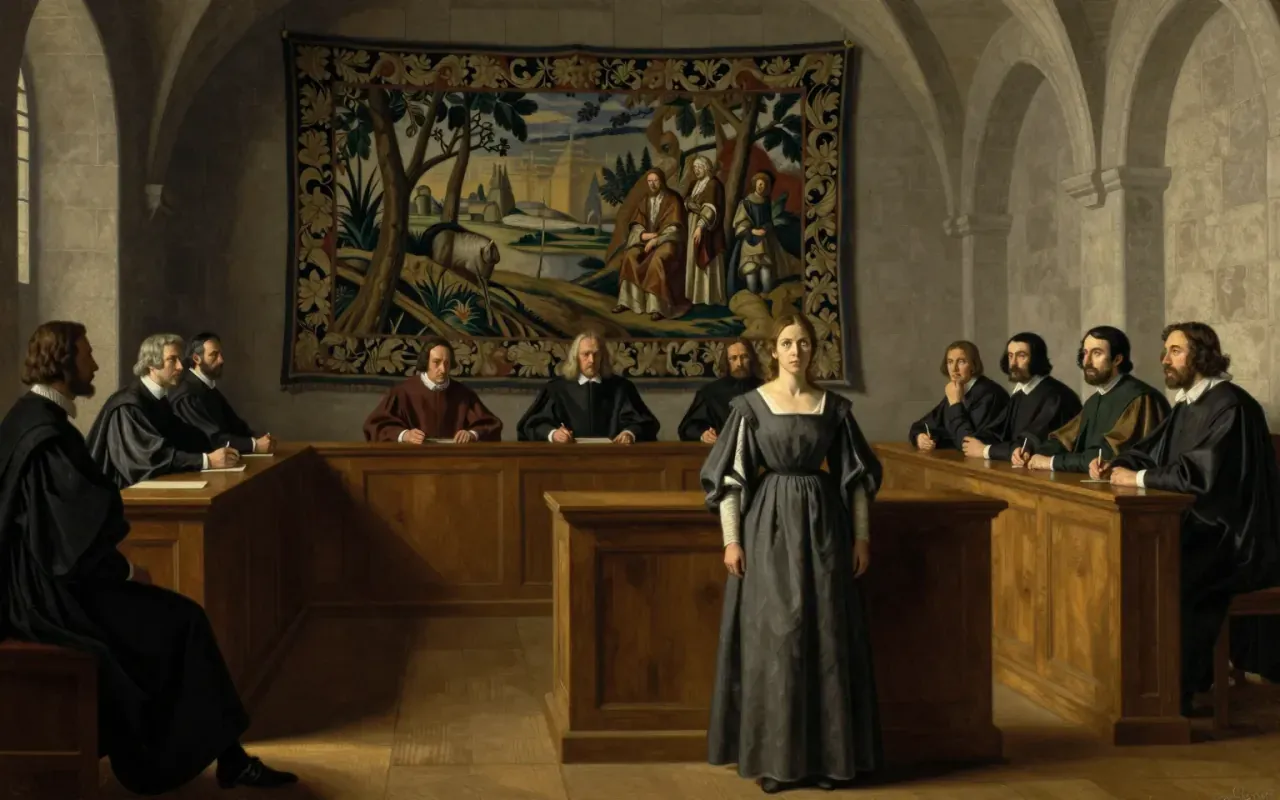
    Hero’s public shaming proves reputation is performative — and fatal — in a patriarchal court.

  4. 7:45
    Truth from the margins

    Truth arrives from below: Dogberry’s watch, Borachio’s drunken confession, not princely authority.

  5. 10:25
    No consequence for slander

    Claudio faces no penalty for accusing Hero — his repentance is enough. That is the play’s quiet horror.

Worth your time?

Yes. Read the whole thing.

4/ 5
What works
  • Beatrice and Benedick are the best-written adults in Shakespearean comedy, and their scenes are in prose for a reason
  • Two words in Act IV — Kill Claudio — turn the play into something else for about ten minutes
  • The eavesdropping scenes are built so the audience is always one step ahead of everyone on stage
What does not
  • Claudio is impossible to like, is forgiven inside a scene, and the play treats that as resolution
  • Don John announces that he is a villain and is given no reason to be one
  • Hero has almost no interiority and is required to forgive a man who accused her of unchastity in church
Read it if
  • Readers who want Shakespeare’s sharpest dialogue rather than his most quoted
  • Anyone interested in how a comedy absorbs real cruelty and keeps going
Skip it if
  • Readers who need the ending to be earned by everyone in it
  • Anyone allergic to plots that hold together only because nobody asks the obvious question
The written brief1 min read

What the book is

A comedy of about 1598, printed in 1600. A returning soldier is tricked into rejecting his bride at the altar, while two sworn enemies of marriage are tricked into each other.

The main ideas

Both plots run on overheard conversation. The same device — letting someone believe what they were meant to overhear — makes one couple and nearly destroys another. Shakespeare is deliberate about the symmetry: the mechanism is neutral, and everything depends on the intent of whoever set it up.

What works

Beatrice and Benedick. Their exchanges are in prose, faster and more modern than anything around them, and the play is noticeably more alive when either is on stage. The gulling scenes, where each overhears that the other is in love, are the best-timed comic writing in the canon.

What does not

The Claudio plot. He takes a stranger’s word over his bride’s, humiliates her publicly, is told she is dead, and is forgiven within a scene. The machinery works only because no character asks a question that would end it in a minute.

The themes

What overhearing does. The distance between wit and feeling, and how long two clever people can use the first to avoid the second. Reputation as a thing held entirely by other people.

Who should read it

Anyone who thinks Shakespearean comedy is all mistaken twins. This is the one with adults in it.

Who should not

Readers who want Claudio punished. He is not.

The assessment

Half of it is the finest comic dialogue Shakespeare wrote. The other half is a slander plot held together by everyone agreeing not to think. It survives on Beatrice, and that is enough.

Is it worth your time

Yes, for two characters. If the reconciliation annoys you, you are in good company — it annoys most people.
Same shelf · Drama4 of 9
Up next in Books

Neuromancer

William Gibson · 1984 · 13:00

A washed-up hacker in cyberspace. Gibson did not predict the future—he named it first.

13:00