What the book is
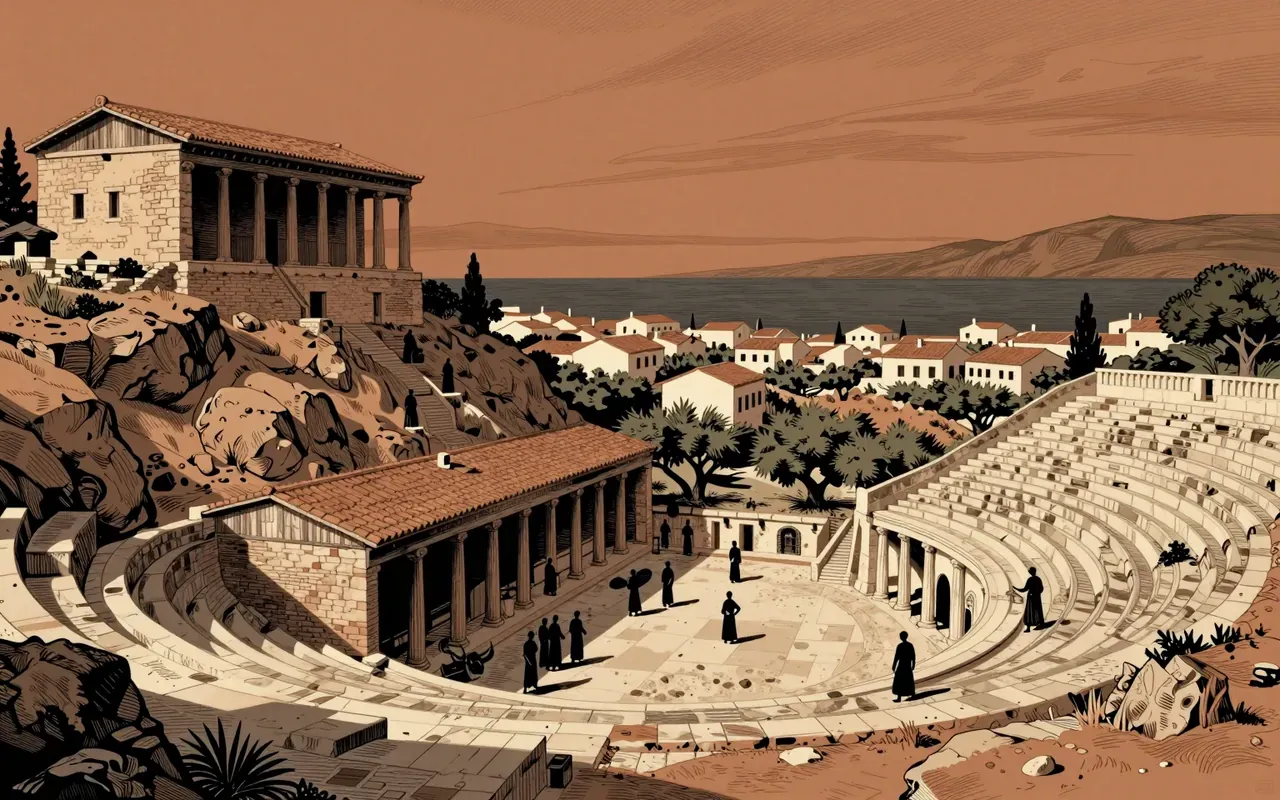
The first play of Aeschylus’s Oresteia trilogy, written in 458 BCE. It dramatises Agamemnon’s return from Troy and immediate murder by Clytemnestra in Argos. The action unfolds over one day, in front of the royal palace. There is no offstage narration — every report is witnessed, contested or undermined.
The main ideas
Vengeance cycles through bloodlines: Thyestes’ feast → Agamemnon’s sacrifice → Clytemnestra’s murder. Hubris triggers divine recoil: Agamemnon walks on tapestries, sacrifices his daughter, and accepts worship as if he were a god. Clytemnestra’s ‘justice’ is framed as law, not passion — she cites precedent, not feeling.
What works
The Watchman’s opening monologue grounds the play in bodily exhaustion and starlight. Clytemnestra’s beacon speech (Q2) transforms news into incantation. The crimson tapestries scene forces Agamemnon to choose between hubris and humility — and he chooses hubris in real time.
What does not
The Chorus’s long retelling of Iphigenia’s sacrifice adds no new insight. Cassandra’s prophecy is powerful but static — she speaks truth and is ignored, then dies without agency. Aigisthos’s entrance undermines Clytemnestra’s claim to righteous autonomy by inserting male dynastic ambition where the play had built female moral authority.
The themes
The play turns on cosmic recoil (‘Agâ’), not fate or free will alone. It treats justice as ancestral debt, not individual guilt. The crimson tapestries are not luxury but sacrilege — a visual contract broken before the murder begins.
Who should read it
Readers who want to see how Greek tragedy builds moral ambiguity through ritual language and spatial constraint. Those studying how ancient drama stages divine law without gods on stage.
Who should not
Readers expecting psychological realism. Those who need clear moral alignment: Clytemnestra is never villainised, Agamemnon never exonerated, and the Chorus is consistently wrong.
The assessment
The Agamemnon argues that vengeance is not catharsis but contagion — that Clytemnestra’s murder of Agamemnon repeats Thyestes’ feast, not resolves it. It fails to grant her interiority beyond rhetoric: her prayers are public, her grief performative, her justification rehearsed. The Watchman’s opening monologue works because it is weary, specific, and human; the Chorus’s exposition does not, because it recites myth as if the audience needed reminding.
Is it worth your time
Yes — but only if read aloud, with attention to choral rhythm and the physical weight of each decision. Not as literature to be parsed, but as architecture to be entered.