What the book is
A five-act Sturm und Drang tragedy first performed in 1782, published in 1805, about two brothers: Charles, disinherited and turned robber; Francis, who engineers his brother’s ruin using forged letters and manipulated grief. The play unfolds across a Saxon manor, a tavern, a prison yard, a forest camp, and a castle dungeon.
The main ideas
The play rejects Aristotelian unity to stage moral contagion: Francis’s lies infect Old Moor’s judgment, Charles’s despair infects the robbers’ violence, and Amelia’s faith infects her own destruction. It treats filial duty as a trap, romantic love as a liability, and divine justice as silent. The central claim is that virtue cannot survive systemic betrayal—and when it tries, it becomes fanaticism.
What works
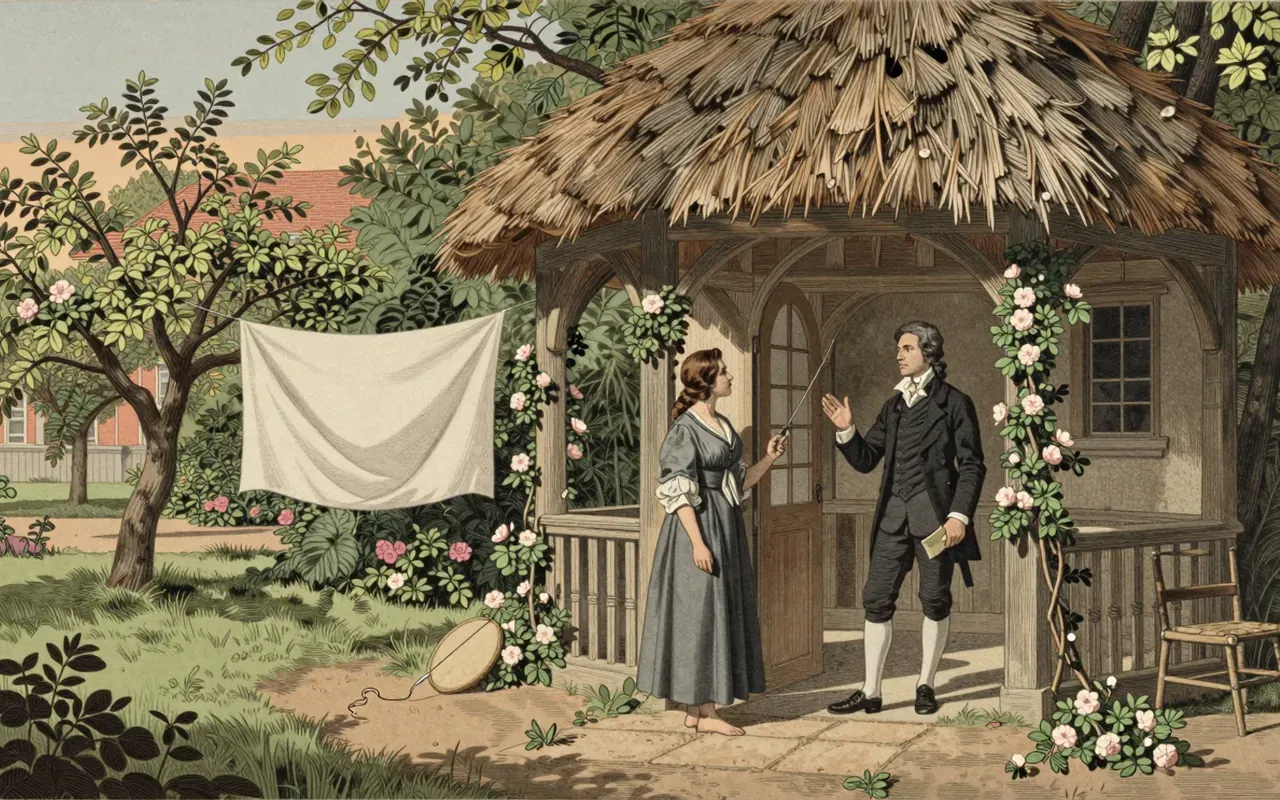
Francis’s manipulation of Old Moor via forged letter (Act I) is chillingly precise. Amelia’s sword-drawn rejection of Francis (Act III) is the play’s single unambiguous act of moral clarity. The dungeon revelation—Charles finding his father chained and half-dead (Act IV)—is structural and visceral: the estate’s moral rot made architectural.
What does not
It fails to make Francis’s philosophy coherent: his soliloquies are rhetorical flourishes, not arguments. The robber band’s code is never defined, only invoked in speeches. Charles’s psychological rupture is dramatised through action, not interiority—so his guilt feels imposed, not earned. The father’s deathbed scene is theatrically potent but morally inert: Old Moor dies without confronting Francis or acknowledging Charles’s return.
The themes
The play turns on parricide—not just physical, but symbolic: Francis murders his father’s authority, Charles murders his father’s name, and both destroy the moral architecture of the estate. It insists that conscience is not innate but relational—and when severed from trust, it curdles into self-loathing or nihilism. The cloister, the bower, the dungeon, and the robber camp are all failed sanctuaries.
Who should read it
Readers who want to see how German Romanticism weaponised emotional extremity against Enlightenment rationality. Anyone studying the theatrical birth of the antihero—Charles is not redeemed, only broken further by his own ‘nobility’. Students of how drama stages moral collapse without psychology.
Who should not
Readers expecting narrative coherence or character consistency. Those who need villains with motive beyond spite, or heroes with agency beyond reaction. Anyone allergic to rhetorical excess: characters shout scripture, curse heaven, and stab swords into tables mid-sentence.
The assessment
The Robbers argues that moral corruption is contagious, that idealism collapses under betrayal, and that justice without mercy is indistinguishable from vengeance. It shows Francis von Moor weaponising scripture and reason to disinherit Charles, then Charles embracing banditry as the only form of agency left to him. The play ends not with redemption but with Charles killing Amelia—his betrothed—as a final act of self-punishment before surrendering to the law.
Is it worth your time
Selectively. Read Acts I and V straight through. Skip Act II’s prison break spectacle and most of Act IV’s nostalgic monologues. The play’s power is in its ruptures—not its resolutions—and its best moments are under two minutes of stage time.