What the book is
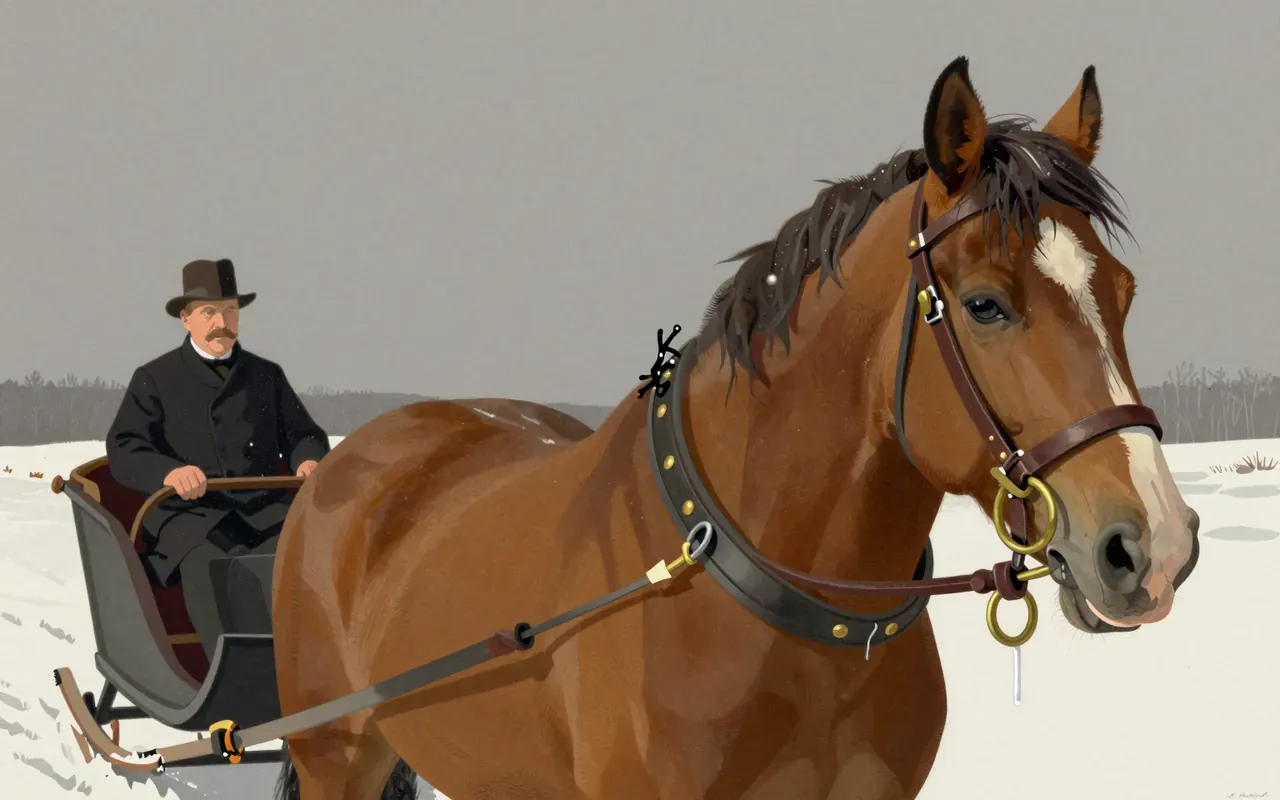
A single-night parable set in a Russian blizzard, published in 1910. Vasili Andreevich Brekhunov, a Second Guild merchant, abandons his labourer Nikita in snow, circles blindly past him, then returns to die warming him. The horse Mukhorty collapses twice. The wormwood circle (VIII) is the story’s pivot.
The main ideas
Hierarchy dissolves in extremity: the merchant becomes servant to the labourer he exploited. Salvation arrives through embodied action — Vasili warming Nikita with his body (IX), not prayer or confession. Nature is indifferent: the storm erases roads, time, and status equally. Wormwood (VIII) symbolises futile human striving against inevitability.
What works
The wormwood circle (VIII) is unforgettable: Vasili mistaking wind-tossed plants for salvation, then realising he has circled fifty paces. Nikita’s quiet competence — rescuing Mukhorty from drifts (V), refusing vodka before icons (IV) — grounds the allegory. The final image: Vasili’s frozen body rolled from Nikita by shouting peasants (X).
What does not
The peasant homestead scene (IV) adds social commentary but dilutes the core parable. Vasili Andreevich’s business calculations in the sledge (VI) repeat without deepening his character. The epilogue’s two-decade coda (X) softens the story’s starkness without adding insight.
The themes
The story turns on moral inversion: mastery as servitude, wealth as blindness, survival as surrender. It treats death not as tragedy but as revelation — Nikita’s resignation (VII) and Vasili’s joy at dying (IX) are structurally identical moments of clarity. God appears only as ‘Chief Master’ (VII), not a figure of intervention.
Who should read it
Readers who want a precise, unsentimental demonstration of Tolstoyan ethics — not theory, but anatomy of conversion. Anyone studying how fiction stages spiritual rupture through physical constraint. Those who value economy: 12,000 words, no subplot, one storm, two men, one horse.
Who should not
Readers seeking psychological realism: Vasili’s change is abrupt, not gradual. Those who require narrative symmetry: Nikita survives, but gains nothing; Vasili dies, but achieves nothing tangible. Anyone expecting historical texture beyond the blizzard, the sledge, and the icons.
The assessment
Tolstoy argues that moral awakening requires physical extremity and the collapse of hierarchy. Vasili Andreevich’s transformation occurs only when stripped of status, warmth, and control — not in church, not in thought, but frozen atop Nikita. The wormwood circle (VIII) proves his rationality is useless. His final joy (IX) comes from surrendering selfhood, not doctrine.
Is it worth your time
Yes — if you read it once, slowly, in under ninety minutes. Skip the homestead interlude (IV) unless studying Tolstoy’s sociology. The core sequence — from Grishkino to the sledge to the wormwood circle to the sacrifice — is flawless. It does what Tolstoy demanded: shows, never tells, how a man becomes human.