booksbriefs
14:20in productionCh. 1 · Departure and awakening/ 14:20 · ceiling 15 min
Literary fiction

The Cossacks

Leo Tolstoy · 1910 · 480 pages → 14 min 20 s

Love is not a bridge between worlds — it is the border you cannot cross.

Tolstoy’s novella argues that love is not a bridge but a border — a truth exposed when Moscow aristocrat Olénin fails to win Maryánka amid the Grebénsk Cossacks. The brief isolates the khorovód, the death-song and the farewell as the book’s moral core. It tells you which chapters expose Tolstoy’s argument and which merely rehearse Olénin’s delusion.

Chapters & takeaways6
  1. 0:47
    Departure and awakening

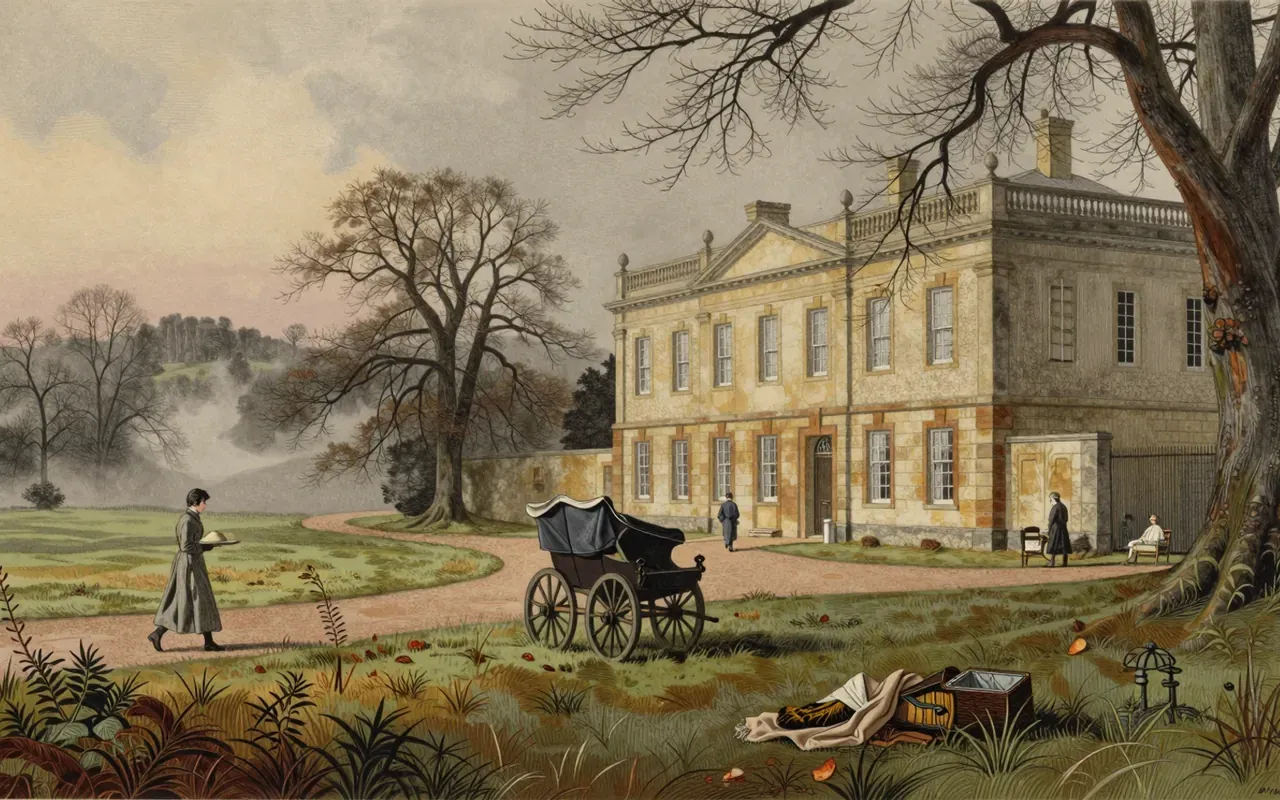
    Olénin leaves Moscow for the Cossack village, believing immersion in nature and labour will cure his spiritual sterility.

  2. 2:58
    Love and the unknowable

    Maryánka’s calm 'crushing and bewitching' equanimity exposes Olénin’s romantic pleading as irrelevant noise.

  3. 5:42
    The moonlit khorovód

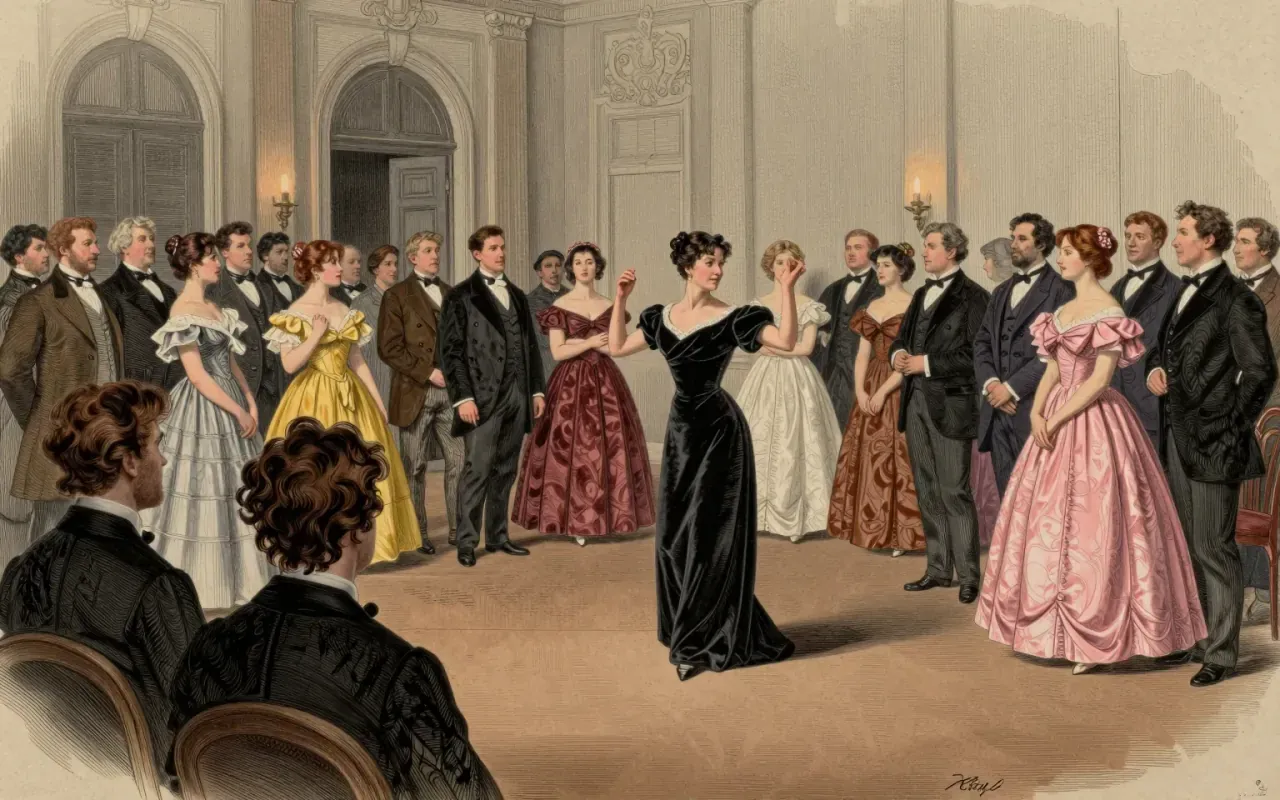
    The khorovód circle is both celebration and courtroom — where Lukáshka asserts possession through song while Olénin begs for private clarity.

  4. 7:02
    The death-song and the rejection

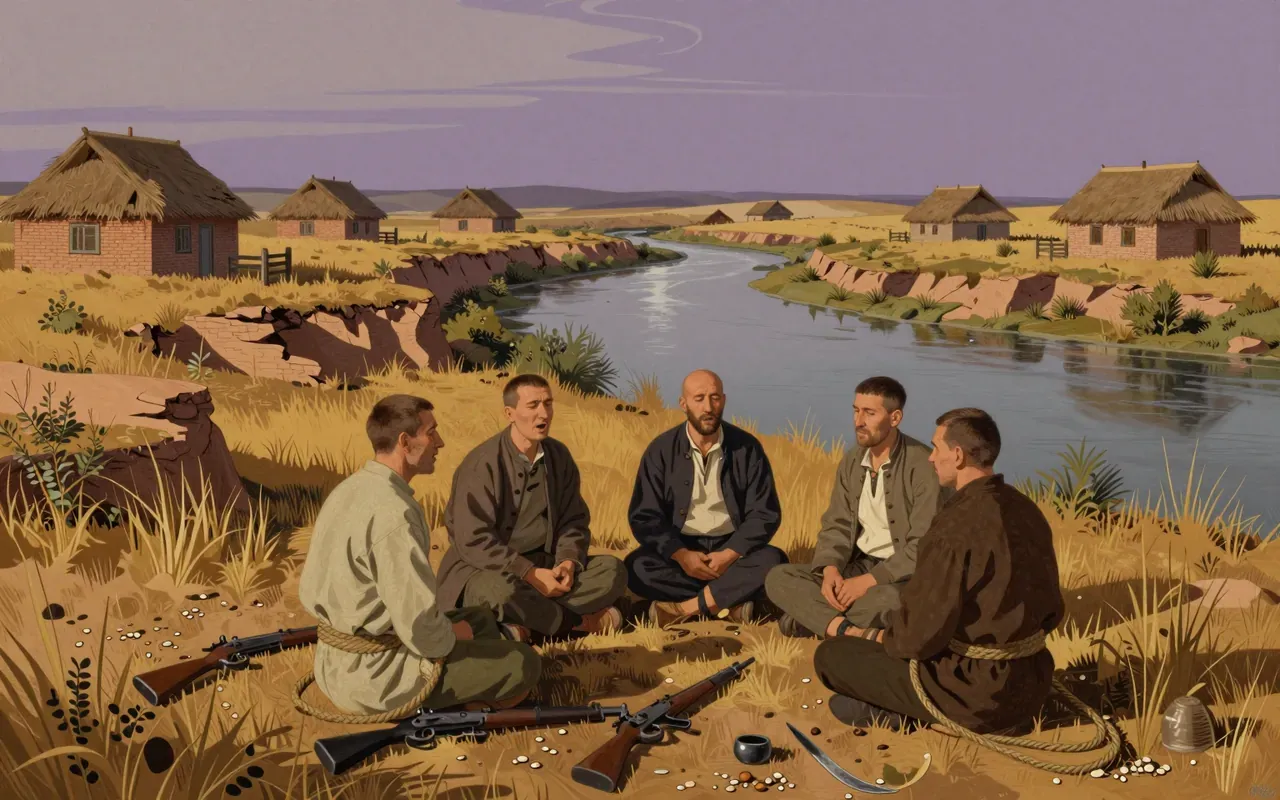
    The Chechens’ death-song — bound knee-to-knee, singing as they are captured — reveals a moral order Olénin cannot enter.

  5. 8:41
    Departure and farewell

    Daddy Eróshka’s drunken tears and plea for a gun confirm Olénin’s irreversible alienation — not from the Cossacks, but from meaning itself.

  6. 10:22
    What to skip

    Skip Chapters I–XXIV: they rehearse Olénin’s doomed idealism without testing it. Start at Chapter XXXVIII.

Worth your time?

Yes. Read the whole thing.

4/ 5
What works
  • The khorovód scene dramatises courtship as public ritual, not private contract.
  • The death-song forces confrontation between stoic fatalism and pragmatic violence.
  • Daddy Eróshka’s advice grounds ethics in terrain, not doctrine.
What does not
  • It offers no redemption for Olénin — his departure is collapse, not growth.
  • It repeats his interior monologue without deepening his moral perception.
  • It treats the Chechens as symbolic counterpoint, not agents with their own logic.
Read it if
  • Readers who want Tolstoy’s unsentimental anatomy of romantic failure.
  • Students of narrative voice that sustains moral contradiction without resolution.
Skip it if
  • Readers seeking psychological development or earned transformation.
  • Those who mistake interior monologue for insight.
The written brief2 min read

What the book is

A novella set among the Grebénsk Cossacks on the Terek river, following Moscow aristocrat Olénin’s two-month immersion, failed courtship of Maryánka, and retreat after Lukáshka’s wounding and her rejection. It contains seven chapters, one horse-stealing episode, one khorovód, one death-song, and one white kerchief.

The main ideas

True morality lives in action, not abstraction: Lukáshka’s authority comes from horsemanship and gesture, not rank; the Chechens’ death-song expresses fatalism more honestly than Olénin’s vows. Civilisation corrupts; the steppe clarifies. Love is involuntary, sovereign, and indifferent to romantic pleading.

What works

The khorovód scene (Ch. XXXVIII) dramatises courtship as public ritual, not private contract. The death-song (Ch. XLI) forces a confrontation between stoic fatalism and pragmatic violence. Daddy Eróshka’s advice — mocking Russian doctors, praising mountain healers — grounds ethics in lived terrain, not doctrine.

What does not

The novel collapses its own thesis: Olénin never integrates into Cossack life, never masters its ethics, and never earns Maryánka’s regard. His final departure is not growth but defeat. Tolstoy gives him no insight beyond despair — no epiphany, no synthesis, no earned humility.

The themes

The book turns on embodied morality, cultural incommensurability, and the illusion of self-transformation. It insists on the steppe’s silence as ethical pressure, on the khorovód as contested social space, and on Maryánka’s calm ‘crushing and bewitching’ equanimity as the unassailable centre of the world it describes.

Who should read it

Readers who want to see Tolstoy’s early, unsentimental anatomy of romantic failure — where love is not a bridge but a border. Those studying how narrative voice can sustain moral contradiction: Olénin’s idealism is rendered with precision, yet never vindicated.

Who should not

Readers seeking psychological resolution or character growth. Olénin remains analytically sharp but morally inert. He misreads every sign — Maryánka’s laughter, Lukáshka’s red face, the Chechens’ song — and learns nothing concrete before he leaves.

The assessment

Tolstoy argues that authentic existence is embodied, communal and unmediated by intellect — a claim tested and shattered in Olénin’s failed courtship of Maryánka. The book’s moral architecture rests on the khorovód circle, the death-song of the bound Chechens, and Daddy Eróshka’s drunken kiss. It fails when it repeats Olénin’s interior monologue without advancing his understanding.

Is it worth your time

Yes — if you read only Chapters XXXVIII, XLI and XLII. These contain the khorovód, the death-song, and the farewell: the three moments where Tolstoy’s argument lands with physical force. Skip Chapters I–XXIV entirely: they are Olénin’s romantic scaffolding, not the building.
Same shelf · Literary fiction4 of 49
13:56
Adventures of Huckleberry FinnMark Twain · 0The book argues that moral clarity emerges from direct human contact, not society’s rules—and that Southern 'civilization' is a fraud sustained by violence and self-deception. It does this through Huck’s choices: faking his death, choosing Jim over religion, and rejecting adoption. Tom’s elaborate rescue is exposed as cruel theatre. Read Chapters I–XVI and XXX–XLII. Skip Chapter XL.
14:38
The Adventures of Tom Sawyer, CompleteMark Twain · 1910Twain’s 1876 novel treats childhood as a site of real moral risk—not innocence, not corruption, but constant negotiation. Tom’s fence-whitewashing, blood oath, courtroom testimony and cave ordeal are not adventures but ethical trials. The book works best in its sharpest scenes: Ch. II, XX, XXXI and XXXIII. Skip the editor’s introduction and the slower interludes.
16:43
The Awakening, and Selected Short StoriesKate Chopin · 0Chopin’s 1899 novel argues that self-ownership is lethal for women in patriarchal society—and shows it through Edna Pontellier’s physical, irreversible awakening and drowning. The selected stories reinforce this with figures who cross thresholds (La Folle), cling to ruins (Ma’ame Pélagie), or lose identity to war (Edmond). Skip the editor’s introduction. Read the novel straight through, then 'La Folle' and 'The Locket'.
13:42
Barren GroundEllen Anderson Gholson Glasgow · 1925Barren Ground rejects romantic redemption. It follows Dorinda Oakley from betrayed youth to stoic middle age, arguing that endurance—not love—is the land’s only reward. The book’s power lies in its refusal of catharsis: Jason’s ruin is physical erasure, not tragedy; Dorinda’s grief is for love she never had, not love she lost.
Up next in Books

The Critique of Pure Reason

Immanuel Kant · 1804 · 14:48

Kant didn’t discover the mind’s limits—he built them into the foundations of knowledge.

14:48