booksbriefs
15:18in productionCh. 1 · The pipe-shank upraised/ 15:18 · ceiling 15 min
Literary fiction

Dead Souls

Nikolai Vasilevich Gogol · 1852 · 317 pages → 15 min 18 s

Russia is so hollow that dead serfs have more legal weight than living ones.

Dead Souls is a satirical diagnosis of imperial Russia’s moral and bureaucratic rot—not a picaresque romp. Chichikov’s ‘dead souls’ scheme works because the state treats serfs as inventory, even when dead. Part I delivers surgical character portraits and systemic critique. Part II collapses into unresolved moralising. Read Part I. Skip the Russia rhapsody. Treat the rest as fragments.

Chapters & takeaways6
  1. 0:52
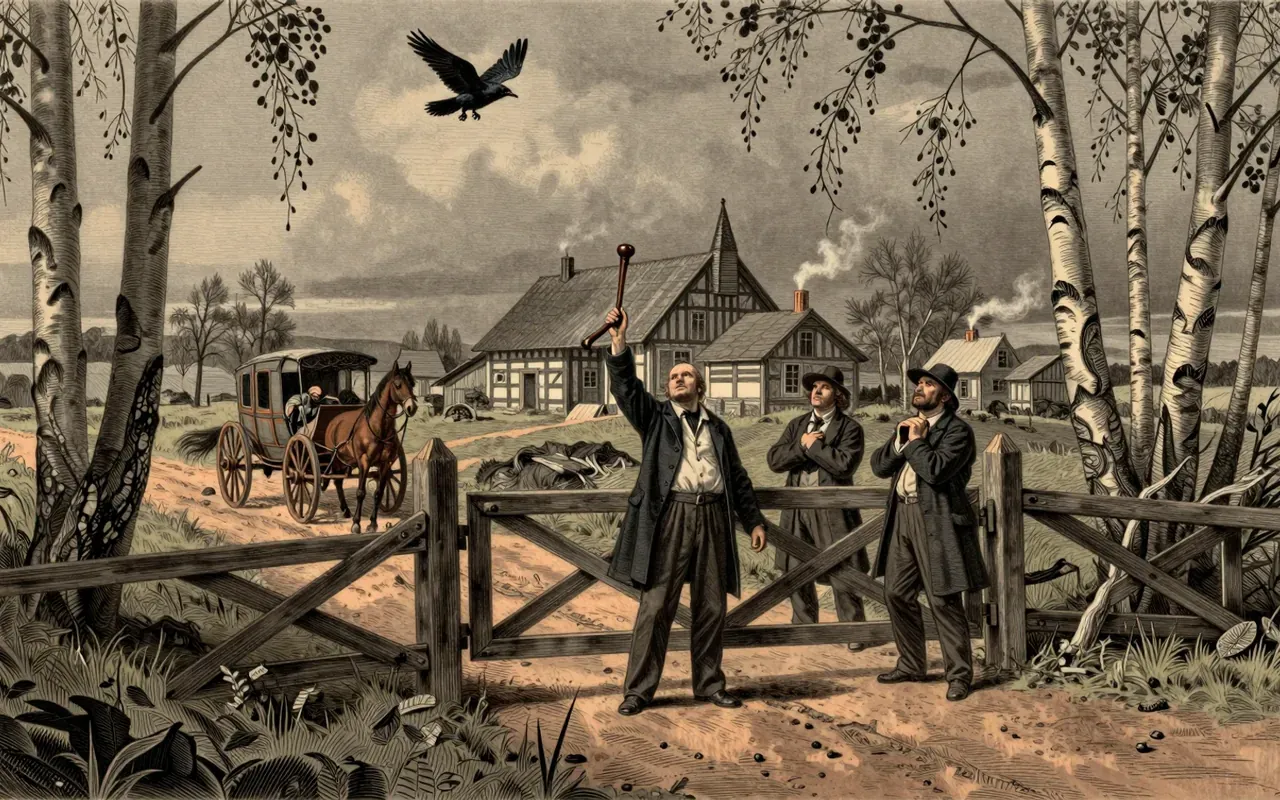
    The pipe-shank upraised

    Nozdrev’s pipe-shank upraised (Q2) is the first image of Russia’s moral infrastructure: performative aggression masking institutional void.

  2. 3:08
    He merely uses

    Chichikov doesn’t steal—he ‘merely uses’ (Q22). His scheme is bureaucratic logic made flesh: dead serfs are assets because the state counts them.

  3. 5:26
    Captain Kopeikin

    The Postmaster declares Chichikov is Captain Kopeikin (Q7). Rumour replaces evidence—and becomes policy.

  4. 7:00
    From customs to corpses

    Chichikov’s origin story reveals his formation: paternal miserliness, schoolroom cunning, Customs Department corruption—then disgrace.

  5. 8:49
    Paralysis and laughter

    Tientietnikov’s paralysis and the General’s laughter expose two failures of Russian gentry: inert idealism and unrestrained vanity.

  6. 10:28
    What to skip

    Skip the Russia rhapsody (Q11) and the unfinished moral turn. Kostanzhoglo’s ‘kopeck before rouble’ (Q20) is sound—but Chichikov abandons it.

Worth your time?

Yes. Read the whole thing.

4/ 5
What works
  • Nozdrev’s pipe-shank upraised (Q2) is an indelible image of performative authority masking void.
  • ‘He does not steal, he merely uses’ (Q22) distils the entire moral architecture in six words.
  • The Postmaster’s Captain Kopeikin declaration (Q7) shows rumour as administrative force.
What does not
  • Part II resolves nothing. Chichikov’s conversion to Kostanzhoglo’s agrarian ideals (Ch. III) is undone by his immediate return to fraud (Ch. IV).
  • The narrator’s Russia rhapsody (Q11) is disconnected from Chichikov’s actions and adds no analytical weight.
  • The Prince’s expulsion order arrives without consequence, leaving Chichikov’s fate—and Russia’s—unresolved.
Read it if
  • Readers studying how satire exposes systemic logic—not just individual vice.
  • Those needing primary-text evidence of 19th-century Russian serf economics and bureaucratic culture.
  • Students of the novel form who want to see narrative structure subordinated to diagnosis.
Skip it if
  • Readers who require narrative closure or consistent tone.
  • Those unfamiliar with Russian imperial administration will miss the satire’s precision.
  • Anyone treating it as a ‘timeless classic’ rather than a working document of collapse.
The written brief3 min read

What the book is

A Russian satirical novel in two incomplete parts. Part I (1842) follows Chichikov’s acquisition of dead serfs across five estates: Manilov, Korobochka, Nozdrev, Sobakevitch and Plushkin. Part II (1852) resumes with Tientietnikov, the General, Kostanzhoglo and Khlobuev—but ends abruptly after Chichikov’s arrest and expulsion. Gogol intended it as a moral corrective, but the surviving text lacks resolution.

The main ideas

The ‘dead souls’ scheme is a logical extension of bureaucratic logic: if serfs are counted for tax and conscription even when dead, their legal fiction can be monetised. Chichikov is not a rogue but a system-accurate operator. Nozdrev’s lies (Q7) expose how easily official reality unravels. Sobakevitch haggles over dead men like livestock. Plushkin hoards rotting paper while his estate crumbles. The scheme works because the state treats people as inventory.

What works

The character pairings are devastatingly precise: Nozdrev’s pipe-shank upraised (Q2) versus Chichikov recovering from ‘his unpleasant predicament’; Sobakevitch haggling over dead serfs like livestock; Plushkin living amid dust and decay while hoarding keys. The narrator’s voice is unsparing: ‘he does not steal, he merely uses’ (Q22). The Governor’s ball scandal (Ch. IX) shows rumour as administrative force.

What does not

Part II collapses under its own ideological weight. Kostanzhoglo’s agrarian sermon (Ch. III) is abruptly undercut by Chichikov’s reversion to fraud in Ch. IV. The Prince’s expulsion order arrives without consequence or resolution. The narrator’s digressions—especially the Russia-as-mysterious-force passage (Q11)—are grandiose but disconnected from Chichikov’s actual trajectory. The book fails to cohere as a whole.

The themes

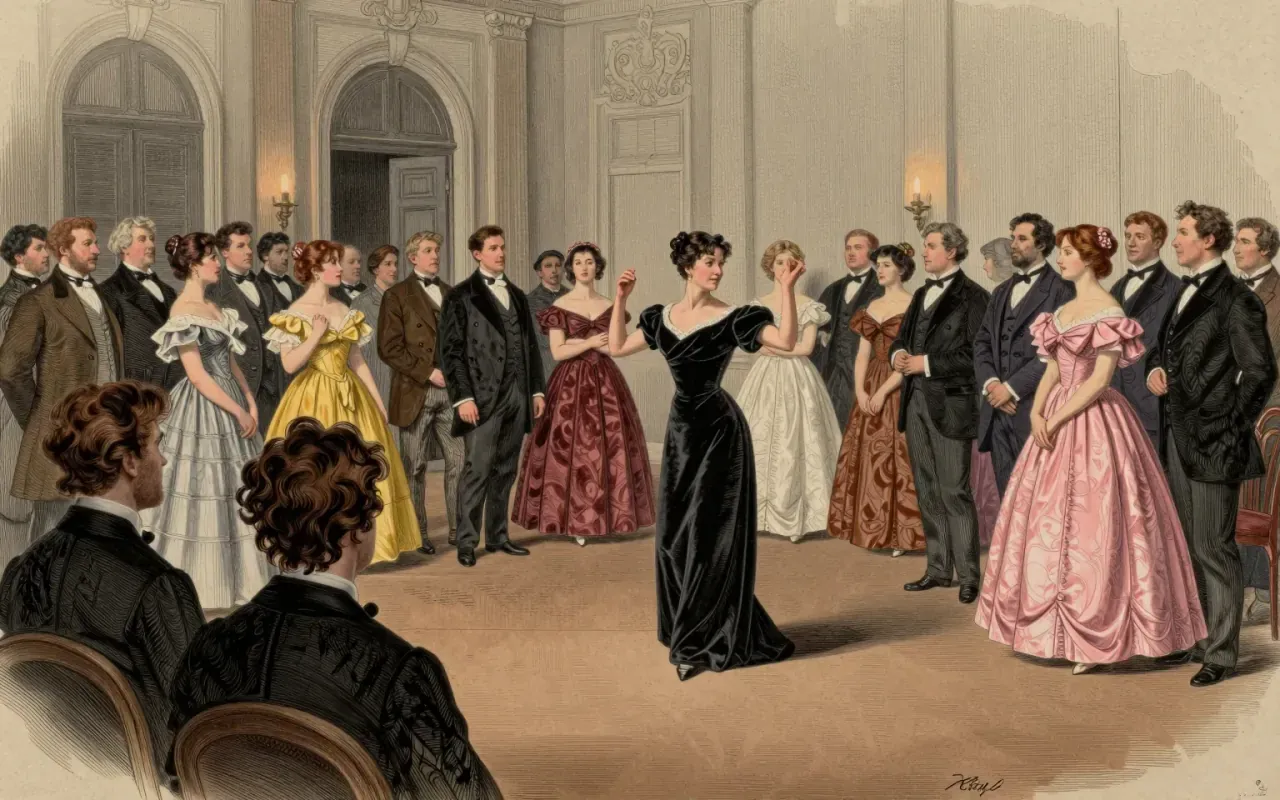
Absurdism is structural: the Postmaster identifies Chichikov as Captain Kopeikin (Q7) and sets off a chain of mutually contradictory accusations. Corruption is procedural: Chichikov ‘does not steal, he merely uses’ (Q22). Moral vacancy is performative: the Governor’s ball scandal hinges on Nozdrev’s lie that Chichikov plans to abduct the Governor’s daughter. Russia itself is personified as poor, disordered, and unhomely (Q11).

Who should read it

Readers who want to understand how satire functions as systemic diagnosis—not just mockery—should read it. Those studying 19th-century Russian bureaucracy, the serf economy, or the formal invention of the novel-as-institutional-critique will find concrete, scene-level evidence: the rigged chess match at Nozdrev’s (Ch. IV), the funeral procession interrupting Chichikov’s flight (Ch. XI), the General’s laughter at the ‘uncle’ ruse (Ch. II).

Who should not

Readers seeking narrative closure should skip it. Part II is fragmentary and ideologically unstable. Readers who require consistent tone will struggle: the narrator shifts from cynical irony (Q3) to patriotic rapture (Q11) to didactic sermon (Q20) without transition. Those unfamiliar with Russian imperial administration will miss the precision of the satire: the ‘tchinovniks’ panic (Ch. X) only lands if you know how rank-based bureaucracy functioned.

The assessment

Dead Souls is a satirical novel in two parts, published in 1842 (Part I) and posthumously in 1852 (Part II). It follows Pavel Ivanovich Chichikov’s journey across provincial Russia to buy the legal rights to deceased serfs—‘dead souls’—to use as collateral for credit and status. The book is unfinished: Gogol burned Part II’s manuscript and rewrote it under spiritual duress; the surviving version breaks off mid-narrative. Its core premise is not economic satire alone but a diagnostic of moral and institutional atrophy in imperial Russia.

Is it worth your time

Yes—if you read Part I straight through and treat Part II as a set of diagnostic fragments. Skip the narrator’s Russia rhapsodies (Q11) unless you’re studying Gogol’s late style. Read Ch. IV (Nozdrev), Ch. V–IX (Sobakevitch, Plushkin, the ball), and Ch. XI (Chichikov’s origin) first. Then dip into Part II’s Ch. I (Tientietnikov) and Ch. III (Kostanzhoglo) for contrast. Avoid reading it as a ‘classic’—read it as a working document of collapse.
Same shelf · Literary fiction4 of 49
13:56
Adventures of Huckleberry FinnMark Twain · 0The book argues that moral clarity emerges from direct human contact, not society’s rules—and that Southern 'civilization' is a fraud sustained by violence and self-deception. It does this through Huck’s choices: faking his death, choosing Jim over religion, and rejecting adoption. Tom’s elaborate rescue is exposed as cruel theatre. Read Chapters I–XVI and XXX–XLII. Skip Chapter XL.
14:38
The Adventures of Tom Sawyer, CompleteMark Twain · 1910Twain’s 1876 novel treats childhood as a site of real moral risk—not innocence, not corruption, but constant negotiation. Tom’s fence-whitewashing, blood oath, courtroom testimony and cave ordeal are not adventures but ethical trials. The book works best in its sharpest scenes: Ch. II, XX, XXXI and XXXIII. Skip the editor’s introduction and the slower interludes.
16:43
The Awakening, and Selected Short StoriesKate Chopin · 0Chopin’s 1899 novel argues that self-ownership is lethal for women in patriarchal society—and shows it through Edna Pontellier’s physical, irreversible awakening and drowning. The selected stories reinforce this with figures who cross thresholds (La Folle), cling to ruins (Ma’ame Pélagie), or lose identity to war (Edmond). Skip the editor’s introduction. Read the novel straight through, then 'La Folle' and 'The Locket'.
13:42
Barren GroundEllen Anderson Gholson Glasgow · 1925Barren Ground rejects romantic redemption. It follows Dorinda Oakley from betrayed youth to stoic middle age, arguing that endurance—not love—is the land’s only reward. The book’s power lies in its refusal of catharsis: Jason’s ruin is physical erasure, not tragedy; Dorinda’s grief is for love she never had, not love she lost.
Up next in Books

Death in Venice

Thomas Mann · 1954 · 15:46

Beauty is not inspiration. It is infection — and Gustav Aschenbach dies from it.

15:46