Steinbeck argues that individual families cannot survive in competition; dignity and survival require collective action.
Steinbeck follows the Joad family from Oklahoma to California during the Great Depression. The novel argues that personal survival alone is meaningless; consciousness must shift from individual to collective. Its ending insists that dignity lies in solidarity.
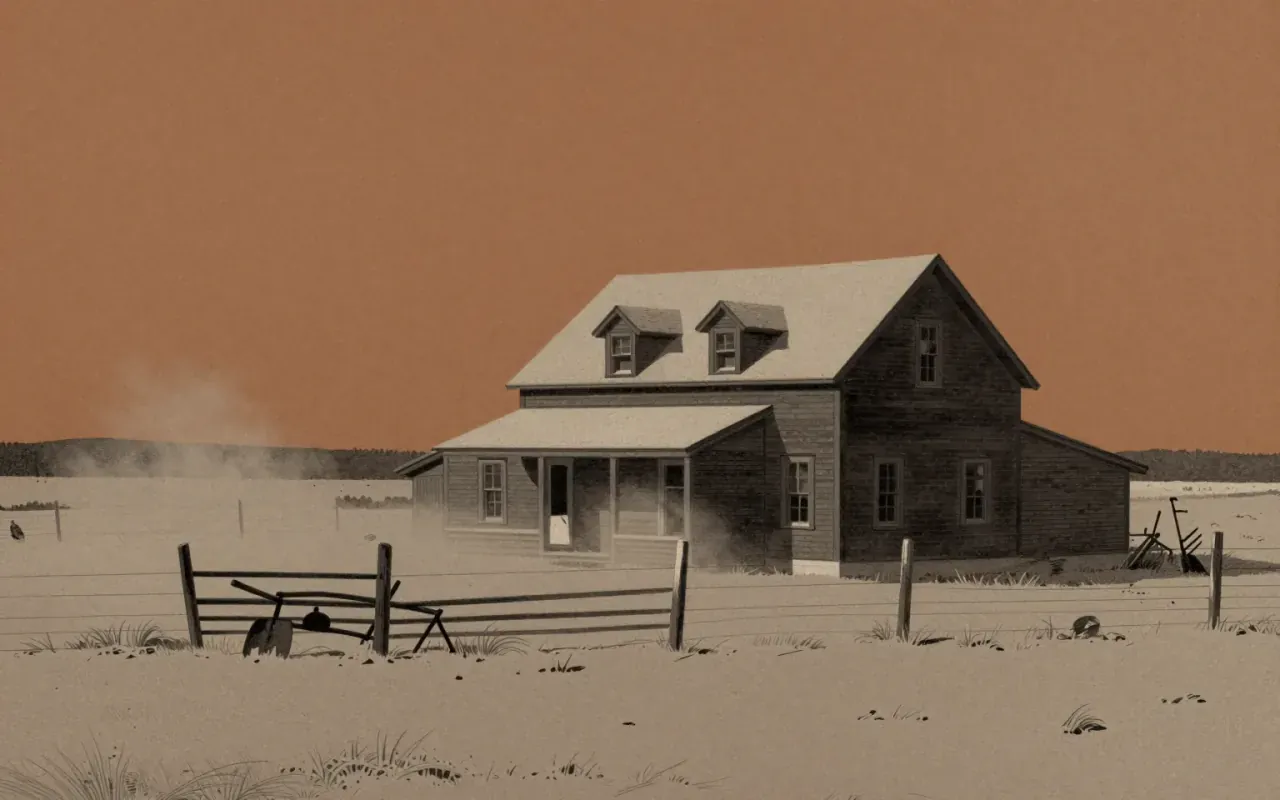
Dust, debt, and eviction force the Joads west. Their flight is both personal necessity and political statement.
3:00
The Road
What California promises and what it delivers are opposite. The journey teaches the workers the lie.
7:30
The Camp
Corporate agriculture treats workers as expendable. Survival requires seeing yourself as a class, not a competitor.
11:00
Solidarity
The final chapters move from family to movement. Steinbeck's ending asserts that meaning is collective, not personal.
Worth your time?
Selectively. Start with the brief, then read the parts we point at.
4.5/ 5
What works
The accumulated detail of exploitation and poverty across a family's arc
The formal control and moral clarity of the central argument
The shift from personal to political consciousness as the novel's primary action
What does not
The pacing slackens in the middle sections
Some characterizations have dated considerably
The ending divides readers on whether hope is earned or simply asserted
Read it if
Readers interested in American social and economic history
Those exploring labor politics and collective consciousness
Readers of sprawling family sagas and social argument
Skip it if
Readers seeking light or plot-driven fiction
Those who find didactic prose off-putting
Anyone expecting a quick read
The written brief1 min read
What the book is
Steinbeck’s 1939 novel following the Joad family as drought and debt drive them from Oklahoma to California during the Great Depression. What begins as a personal quest for survival becomes an argument about collective action and the dignity that comes only through solidarity with others.
Is it worth your time
Selectively. The book is long, politically unambiguous, and makes its argument with force. Read it if you want to understand how American fiction confronted economic collapse. Skip it if you’re looking for subtlety or ambiguity in how suffering gets resolved.