An alien world where everyone is ambisexual, and a human envoy learns why that changes everything.
Le Guin's 1969 novel constructs a gender-free society and uses it to strip away assumptions. The brief covers why Gethen matters, what the gender premise actually reveals, and the survival plot that forces intimacy between adversaries.
Gethen is a frozen planet where inhabitants are ambisexual, entering fertility monthly. No one is male or female.
2:30
Why the gender matters
Le Guin uses it to ask what we assume about gender, power, and bodies. The planet is not a utopia; it has politics, war, and the same inequalities in different shapes.
6:10
The journey
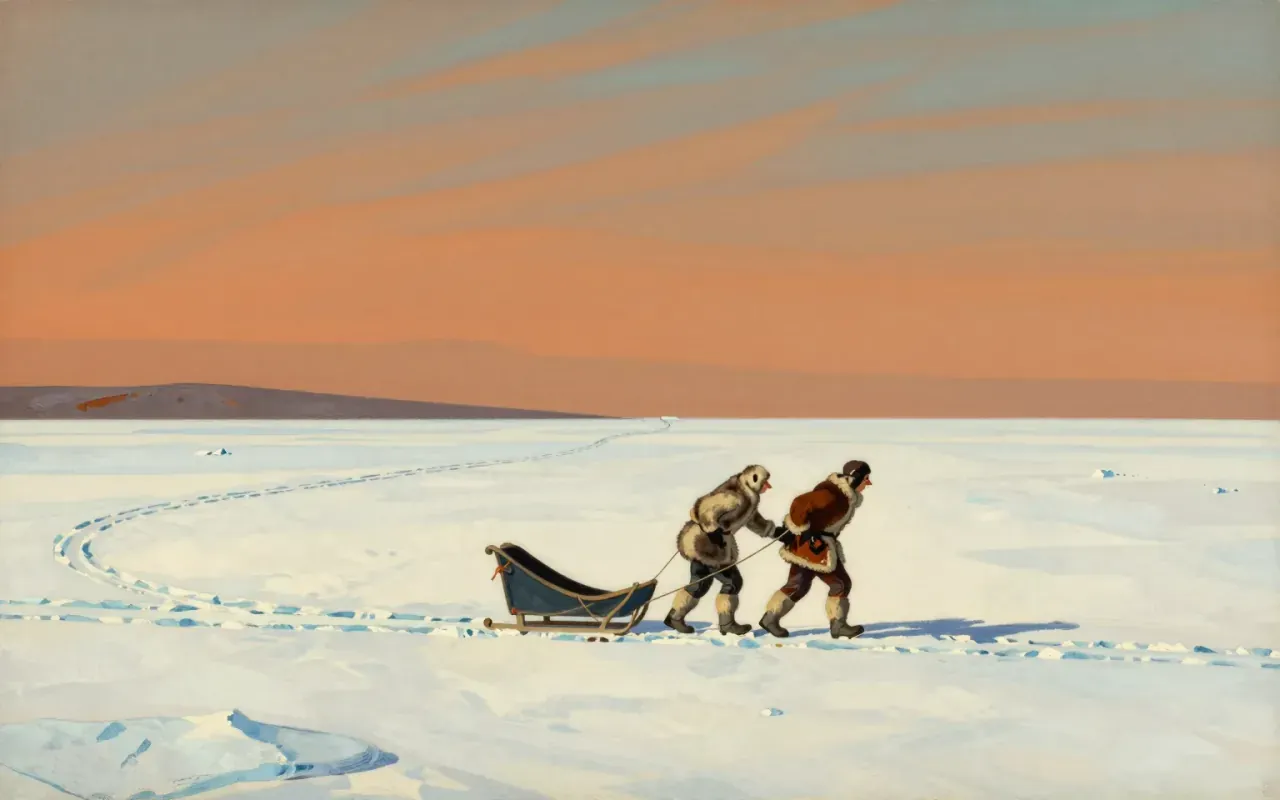
The envoy and an exiled politician cross a frozen continent together. Survival forces understanding; hostility becomes something else.
10:20
What it actually argues
Gender shapes how we think about power, loyalty, and identity. Removing it does not remove hierarchy; it restructures it.
12:00
Why it holds
The prose is spare, the world is coherent, and the core relationship—two people forced to need each other—still moves.
Worth your time?
Yes. Read the whole thing.
4.5/ 5
What works
The gender premise is worked out consistently through every social interaction
The second half, the survival crossing, is genuinely gripping
It argues something real while telling a complete story
What does not
The early political chapters drag before the relationship deepens
It is often cited without being read, and the actual book is colder and stranger than the reputation
Read it if
Anyone interested in how science fiction builds ideas about gender and society
Readers who want elegant worldbuilding without exhaustive exposition
Skip it if
Readers who need plot momentum or comfort in their protagonists
The written brief1 min read
What the book is
Le Guin’s second published novel, a science fiction work sent an envoy to an alien world where no one has a fixed gender. It is part worldbuilding essay, part political intrigue, and part survival narrative about two men—one human, one Gethenian—crossing a frozen continent.
Is it worth your time
Yes. It is one of the foundational texts in how science fiction thinks about gender. It is also a gripping story built on the premise, not merely illustrated by it.