A captain hunts an obsession across the ocean. The whale costs him his crew.
Melville's 1851 whaling epic told from the deck of the Pequod. The brief covers the three days of the chase that end the book, the characters who live it, and why reading only the whale hunt means missing the long argument that precedes it.
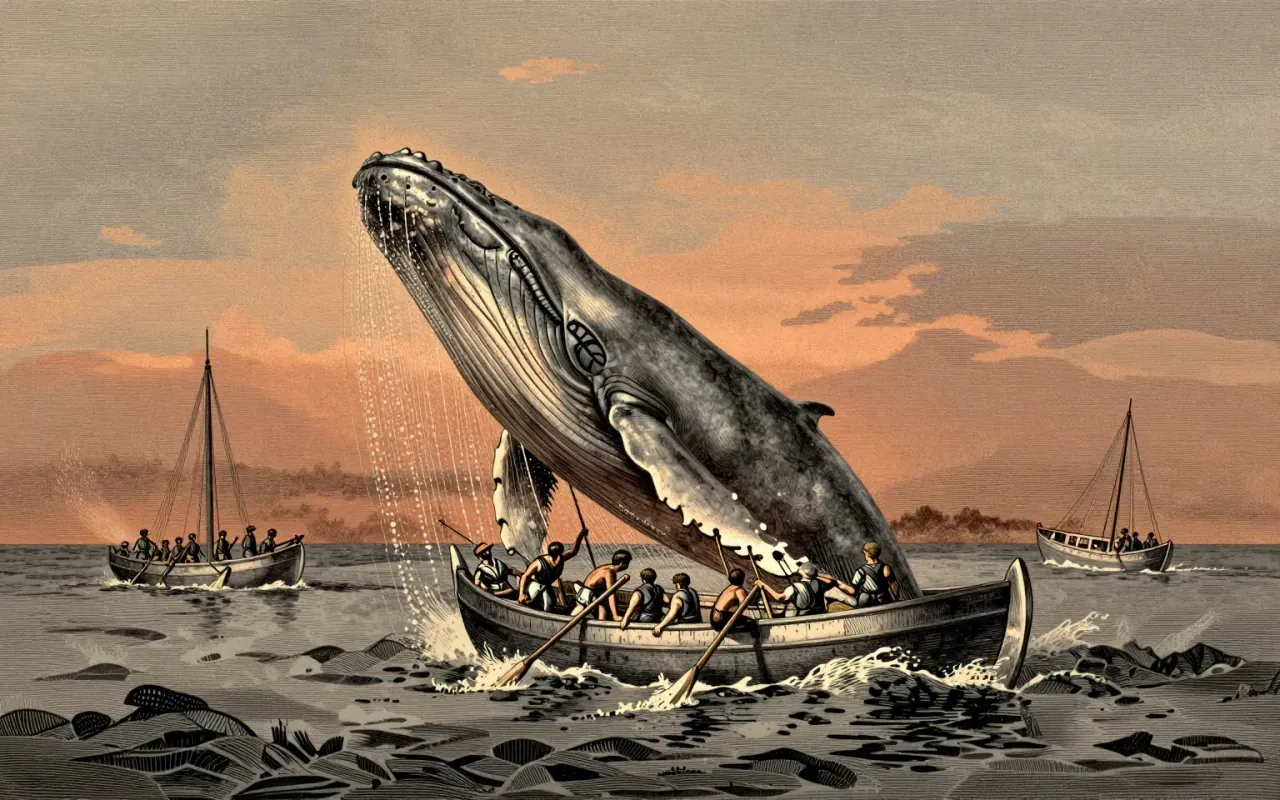
Ahab leads a crew of whalers across the Atlantic. The hunt is routine until he reveals his true prey.
2:45
Ahab's obsession
The captain wants one whale, not profit: the white whale that took his leg years before.
5:30
The three-day chase
Moby Dick appears, and the book becomes action. Ahab's obsession meets the whale's nature.
8:00
The cetology dilemma
Half the book is chapters on whale anatomy, classification, and industry. They were new then. They remain strange now.
Worth your time?
Selectively. Start with the brief, then read the parts we point at.
4/ 5
What works
The final three days are as good as American prose gets
The book builds Ahab's character through repetition, and it works
What does not
The narrative voice is inconsistent: Ishmael vanishes, reappears, and tells things he was not there for
The cetological chapters test patience, and skipping them leaves gaps
Read it if
Readers who want to understand American literature's high point
Anyone curious about the 19th-century whaling industry
Skip it if
Readers who need continuous plot momentum
Anyone who cannot abide obsolete whale science
The written brief1 min read
What the book is
Melville’s 1851 novel of Captain Ahab and the crew of the Pequod, sent to hunt whales across the oceans. Ahab’s true target is a white whale that crippled him, and his obsession will consume the ship.
Is it worth your time
Selectively. Read the opening, the sailing chapters that establish the crew, and the final hunt. The middle cetology can be skipped without loss of narrative, though what you miss is Melville’s purpose: to record an industry and a world.