A soldier unstuck in time watches his life and death from the outside, after surviving a bombing by accident.
Vonnegut's 1969 novel splices autobiography with science fiction to make the firebombing of Dresden absurd instead of tragic. The book moves through time, skipping freely across a life that has already happened, all of it equally real and equally present.
A soldier becomes "unstuck in time"—his consciousness skips through moments of his life in non-linear order. Past, present, and future are all equally real to him.
2:00
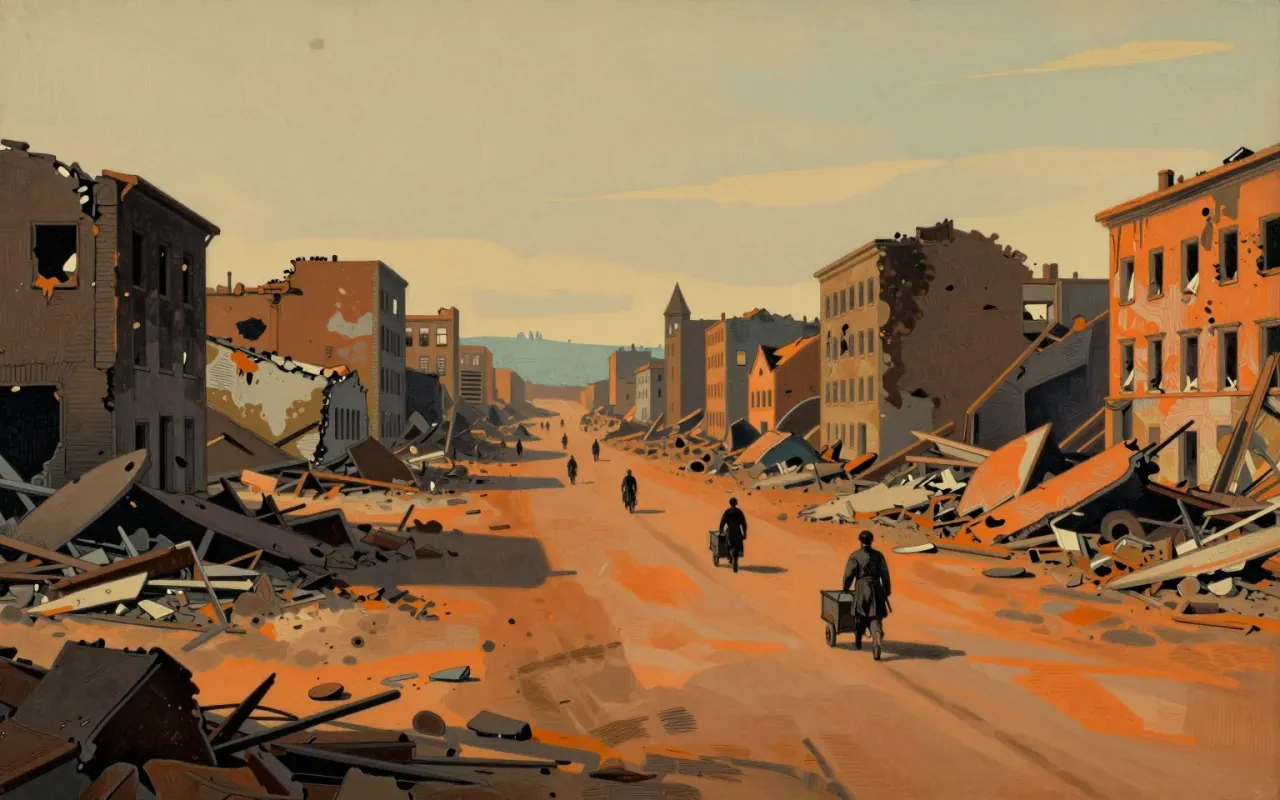
The bombing of Dresden
The core of the book is one moment: a firebombing that killed 130,000 civilians. Vonnegut was there. The novel makes it visible without making it make sense.
5:30
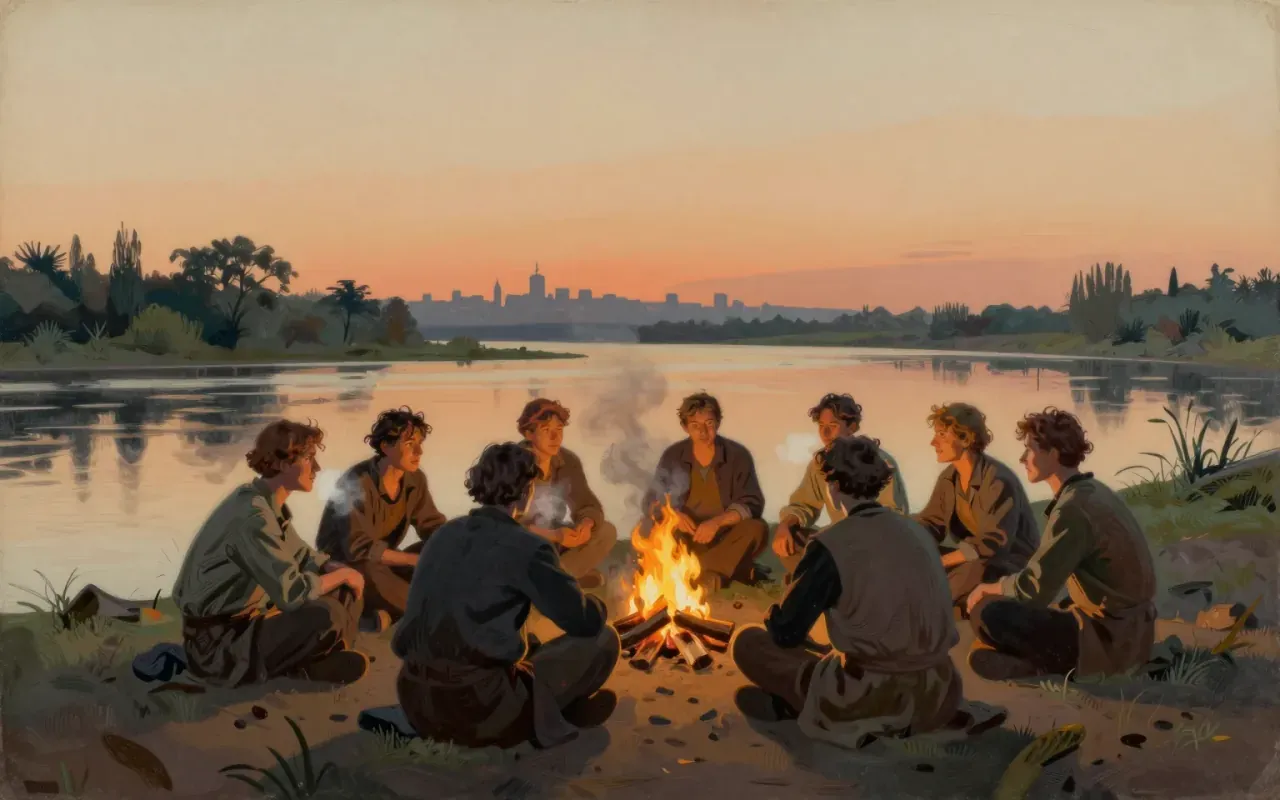
Tralfamadore and the aliens
Billy is abducted by aliens who see all moments at once. They show him a philosophy in which nothing can be changed and every moment—good and bad—just is.
9:00
So it goes
Every death in the book ends with "So it goes." The refrain is deadpan. It does not accept the deaths; it notes them and moves on.
12:00
The anti-war argument
The book does not argue that war is bad. It states that all moments exist simultaneously, nothing changes, and death is one moment among the rest.
Worth your time?
Yes. Read the whole thing.
4.5/ 5
What works
The time-travel structure is genuinely original and makes the book's argument inseparable from its form
The voice is consistent and precise; every digression serves the book
It remains the closest thing American literature has to a bomb going off on the page
What does not
The Tralfamadore subplot can feel thin compared to the historical weight
The philosophy of acceptance reads as cold comfort for real suffering
Some of the satirical targets have dated
Read it if
Readers who want to understand how absurdism talks about war and fate
Anyone studying post-war American literature and its philosophy
People interested in how fiction can hold multiple truths at once
Skip it if
Readers who need linear narrative and conventional plot structure
Those who want straightforward moral arguments rather than formal experiments
The written brief1 min read
What the book is
Vonnegut’s 1969 novel combines autobiography, science fiction, and a non-linear structure to tell the story of Billy Pilgrim, who becomes unstuck in time and experiences his entire life—including the firebombing of Dresden in World War II—as a series of moments he observes from outside.
Is it worth your time
Yes. It is the book that proves you can write about atrocity by refusing to make sense of it. The time-travel framing is not a gimmick; it is the argument.