What the book is
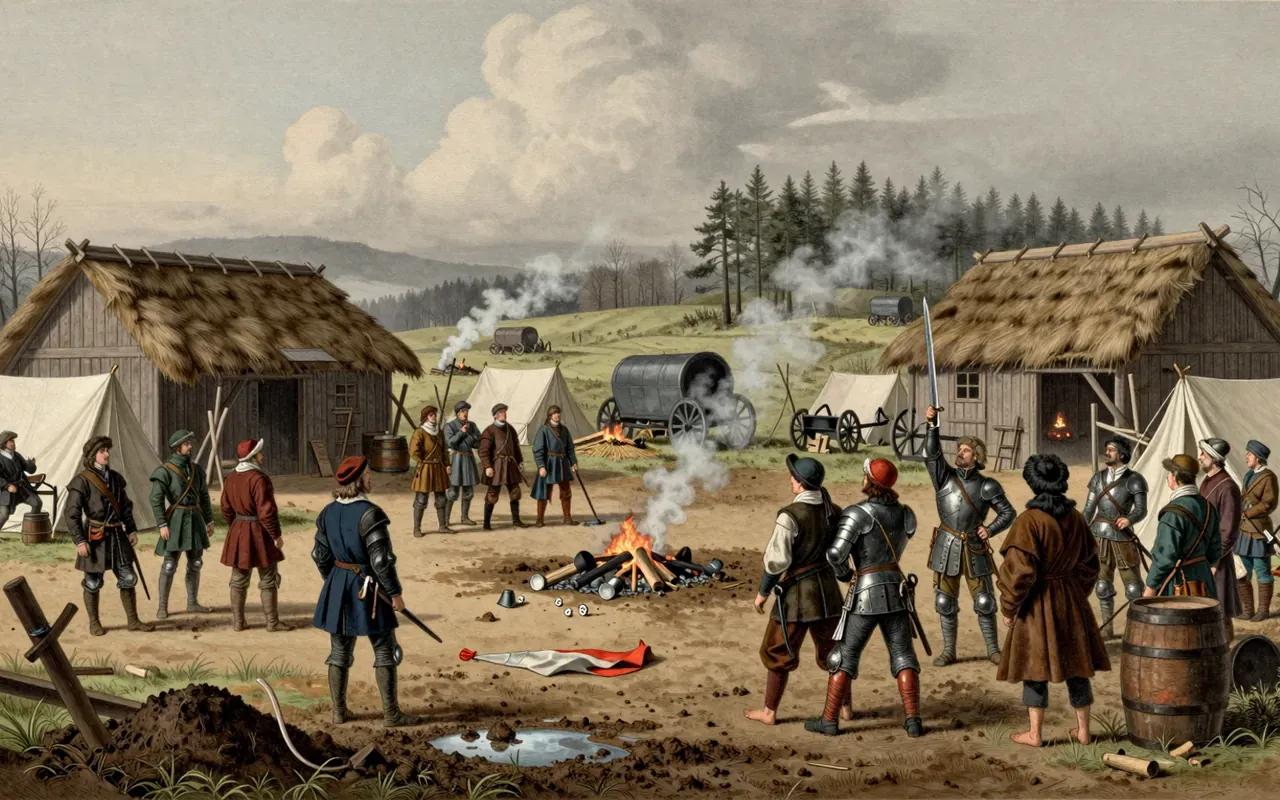
A dramatic poem published in 1805, set in the Pilsen camp of Albrecht von Wallenstein’s army in 1634. It contains no named characters beyond Wallenstein (offstage), Piccolomini (the pledge-bearer), and a Capuchin friar. It has no plot beyond rumour, reaction and collective vow.
The main ideas
The army is a sovereign entity that replaces civil order. Soldierly freedom is violent, collective, and anti-civilian. Loyalty is performative and immediate—not ideological, not contractual. The camp is a temporary world where hierarchy dissolves into noise, dice, and shared defiance.
What works
The chaos is coherent. The soldiers’ voice is unified, rhythmic, abrasive. The Capuchin’s interruption works as structural rupture. The camp’s physicality—dice, plunder, drunken oaths—is rendered with visceral repetition. The absence of Wallenstein makes him more potent.
What does not
It fails as political analysis. No imperial decree is quoted. No Vienna official appears. Wallenstein’s motives remain unstated. The poem avoids cause and consequence: it stages loyalty as instinct, not calculation. There is no character development, no backstory for Piccolomini, no explanation of how the army sustains itself beyond plunder.
The themes
The poem turns on war as liberation from labour, morality and law. It treats loyalty as contagion, not choice. It presents the military camp as a parallel society with its own rites—feasting, gambling, cursing—and its own sacred figure: Wallenstein, unnamed in the text but invoked as presence.
Who should read it
Readers who want to see how German Romanticism staged power without psychology. Those studying the Thirty Years’ War’s cultural afterlife. Anyone interested in how verse dramatises mass allegiance before ideology.
Who should not
Readers seeking historical context, biographical detail or narrative resolution. Those who require clear motivation, character arcs or exposition will find nothing here.
The assessment
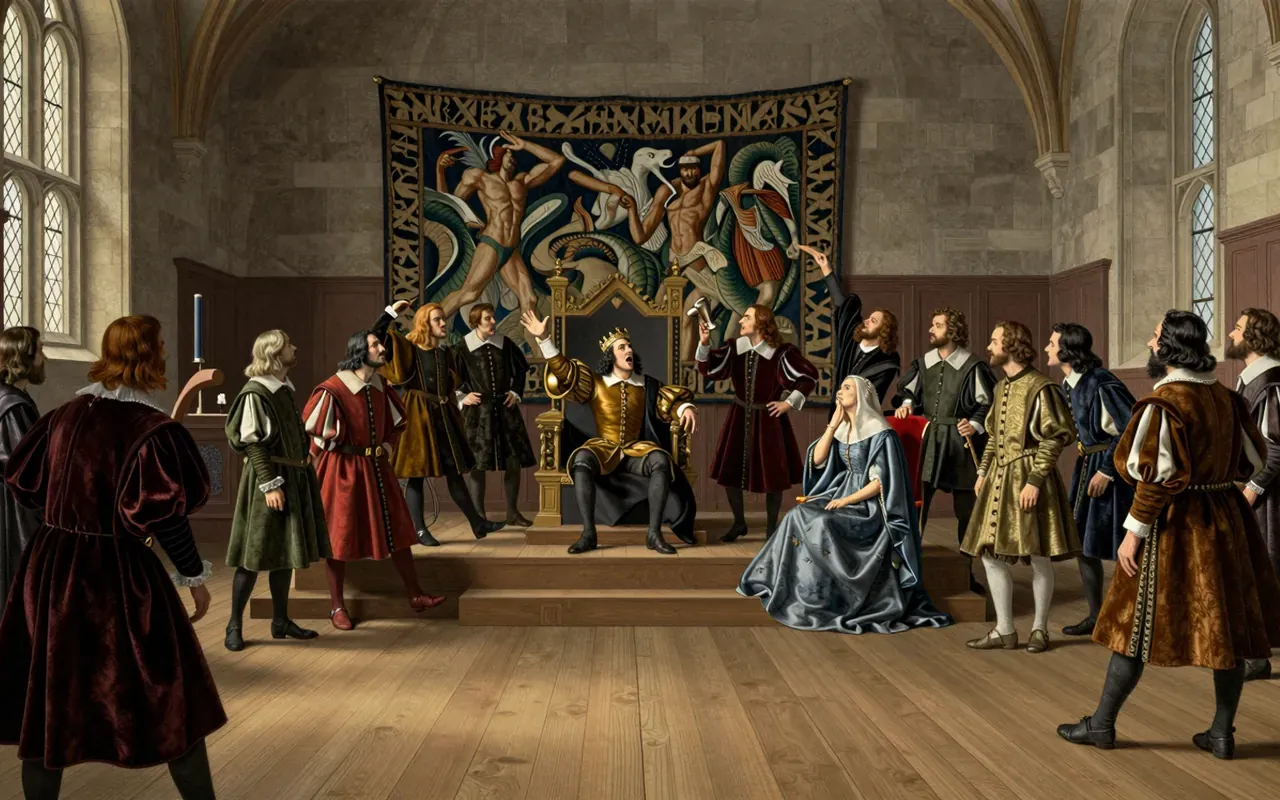
Wallenstein’s Camp is a dramatic poem in verse, not a novel or history. It shows soldiers in Bohemia’s Pilsen camp in 1634, before the Thirty Years’ War’s turning point. The camp is lawless, self-sustaining, and bound only to Wallenstein. The Capuchin friar’s denunciation of blasphemy and heresy triggers near-riot. Rumours of imperial disbandment make the soldiers pledge loyalty to Wallenstein alone through Piccolomini.
Is it worth your time
Selectively. Read it aloud, not silently. Skip the long monologues about honour; they add no new idea. Focus on the crowd scenes—the dice game, the friar’s flight, the oath-swearing. These are the poem’s engine.