What the book is
Othello is a five-act tragedy by William Shakespeare, first performed around 1604. It follows a Black Venetian general who marries Desdemona, then is undone by his ensign Iago’s lies about her infidelity with Cassio.
The main ideas
The play argues that trust collapses faster than it builds. It shows how suggestion replaces evidence when authority is insecure. It treats jealousy not as passion but as a logic engine: once seeded, it reinterprets every gesture, every silence, every object.
What works
The handkerchief motif works with surgical precision across Acts III–V. Iago’s soliloquies work because they are direct, unapologetic, and structurally necessary: we need his voice to understand the mechanism of collapse. Othello’s final speech works because it restores dignity without absolution.
What does not
It fails to justify Iago’s malice beyond assertion. It offers no psychological depth for Desdemona beyond her loyalty. The racial framing is present but uninterrogated: Othello’s blackness is named, feared and exoticised, yet never examined as a system.
The themes
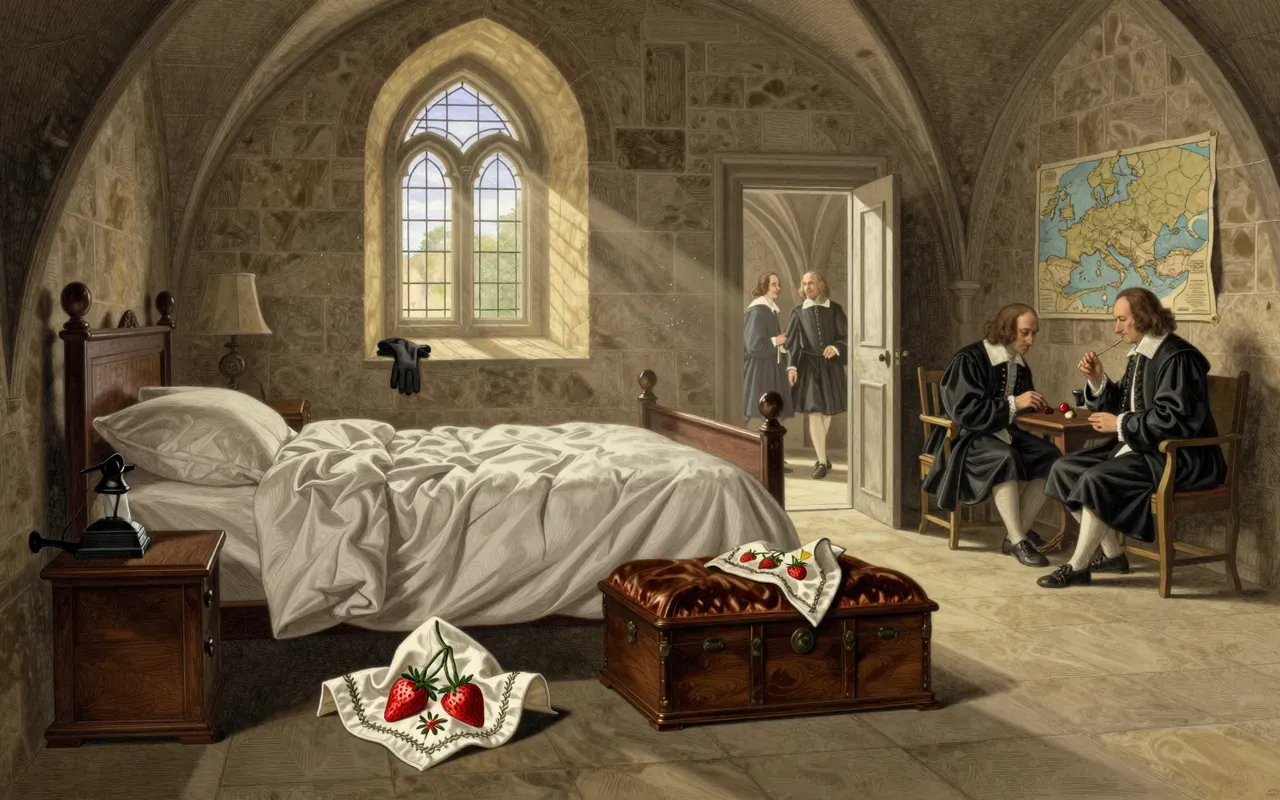
The themes are jealousy, deception, race, and the fragility of reputation. Othello’s status as a general depends on his control; his loss of it is total and irreversible. The strawberry handkerchief appears in three scenes and becomes the sole anchor of truth and falsehood.
Who should read it
Readers who want to see how language alone can dismantle a life. Students of rhetoric, performance, or early modern constructions of race. Anyone who has ever been gaslit—or done the gaslighting.
Who should not
Readers seeking moral clarity or psychological realism. Those who require motive, backstory or redemption arcs will find none. The play refuses to explain Iago or console the audience.
The assessment
Othello is a tragedy in which Iago’s lies about Desdemona’s fidelity corrode Othello’s certainty until he kills her. The handkerchief—stolen, planted, misread—is the only physical object that carries proof and betrayal both. Shakespeare gives Iago no motive beyond ‘I hate the Moor’ and ‘I think Cassio is lecherous’. The play ends with Othello killing himself after learning the truth, not with justice or explanation.
Is it worth your time
Yes—if you read it aloud, watch a production, or study one scene closely. No—if you treat it as historical anthropology or expect resolution. Its power is in compression, not exposition.