A murder in a dysfunctional family becomes the stage for questions about suffering, faith, and whether God can be just.
Dostoevsky's 1880 novel follows four brothers and their father's death, but treats the murder trial as a setup for Ivan's philosophical challenge to God and Alyosha's search for redemption. The book demands the reader inhabit uncertainty rather than resolve it.
Four brothers, a father, and a murder. The plot delivers a trial, but that is not what the novel is about.
2:40
Ivan's rebellion
If a just God exists, He cannot permit the suffering of innocent children. Ivan states the problem that the rest of the book refuses to dismiss.
6:15
The Grand Inquisitor
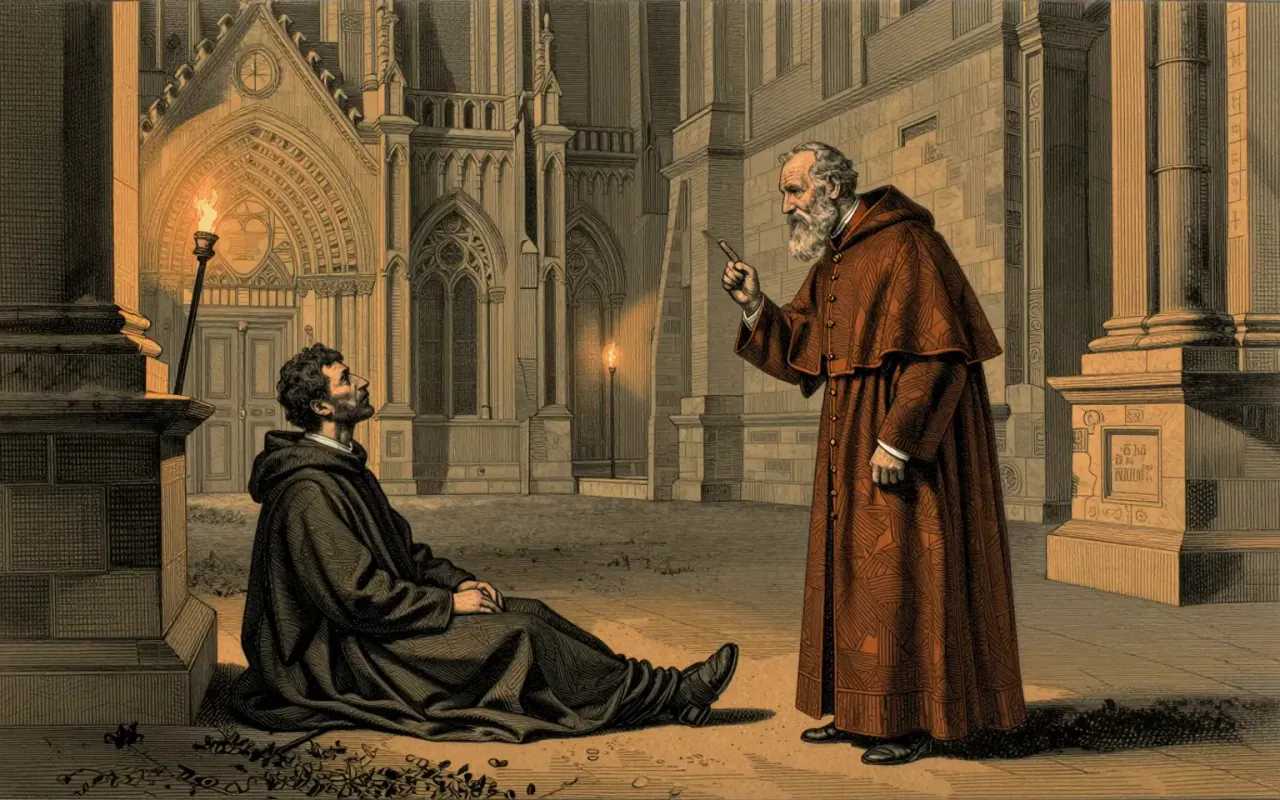
Ivan's parable within the novel: Christ returns to Earth and the Church condemns Him for making men free.
10:00
Alyosha's answer
Love and redemption through human connection, not theology. The novel offers no counterargument to Ivan's logic, only a different mode of being.
13:10
Why it endures
Dostoevsky treats contradiction as the truth. The book refuses to choose between faith and doubt, and that refusal is its strength.
Worth your time?
Yes. Read the whole thing.
4.5/ 5
What works
The philosophical argument is genuine and unevasive
The novel holds multiple truths in tension rather than choosing one
The scale and ambition remain uncommon in modern literature
What does not
The pacing is slow by contemporary standards
Some readers find the religious framework alienating despite the philosophy
Read it if
Readers willing to sit with unresolved philosophical questions
Anyone interested in how suffering relates to belief systems
Skip it if
Readers who need closure or a clear moral position
Those seeking a conventional family drama
The written brief1 min read
What the book is
Dostoevsky’s 1880 novel set in Russia, following four brothers—Dmitri the sensualist, Ivan the skeptic, Alyosha the spiritual seeker, and the illegitimate Smerdyakov—around their father’s murder. A trial frames the narrative, but the novel’s real subject is Ivan’s philosophical case against God in the face of human suffering.
Is it worth your time
Yes, but not as a fast read. The book’s value lies in its refusal to offer comfortable answers. Ivan’s argument about innocent suffering is more rigorous than most 21st-century philosophy you will encounter. Alyosha’s response is not a logical refutation but an alternative mode of living. That tension—between reason and faith, between justice and love—is why the book has not aged.