booksbriefs
13:55in productionCh. 1 · A monument to silence/ 13:55 · ceiling 15 min
Drama

Ghosts

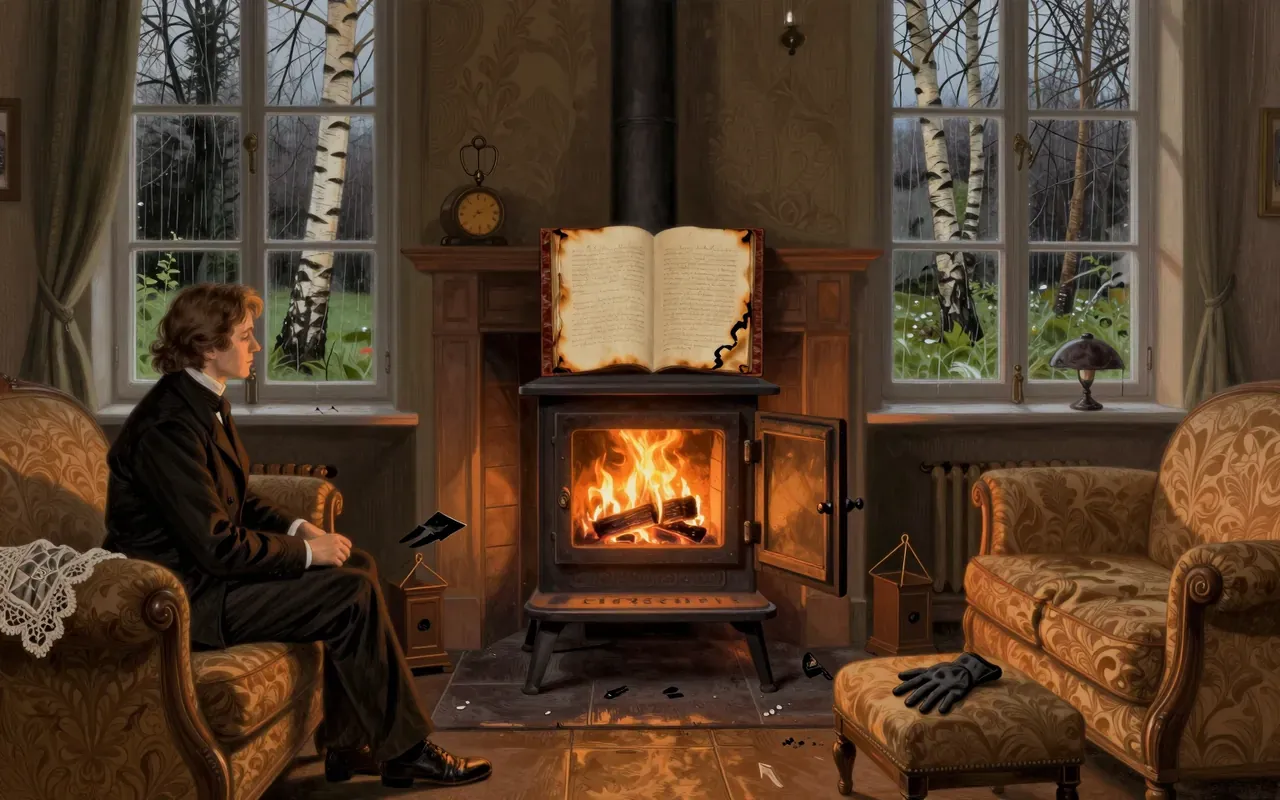
Ghosts are not spirits—they are inherited lies, and they burn down orphanages.

Ibsen’s Ghosts argues that inherited lies—not spirits—are the real ghosts. It shows how moral evasion destroys lives across generations. The brief explains why the Orphanage fire matters, what ‘ghosts’ actually mean, and why the ending refuses resolution.

Chapters & takeaways5
  1. 0:43
    A monument to silence

    The Orphanage is built to hide Captain Alving’s profligacy—not to honour him.

  2. 2:32
    What ghosts really are

    ‘Ghosts’ are inherited ideas, beliefs and moral hypocrisies—not spirits.

  3. 5:10
    Inherited syphilis

    Oswald’s syphilis is both medical fact and metaphor for intergenerational moral contagion.

  4. 8:07
    The fire

    The Orphanage fire proves moral evasion has physical consequences.

  5. 10:33
    No resolution

    Mrs. Alving freezes instead of acting—exposing mercy killing as an unbearable demand, not a solution.

Worth your time?

Yes. Read the whole thing.

4.5/ 5
What works
  • Q5 defines ‘ghosts’ as inherited ideas, not spirits.
  • The Orphanage fire validates the thesis physically and irrevocably.
  • Regina’s departure rejects both blood and class ties—agency without redemption.
What does not
  • It resolves Oswald’s euthanasia demand with moral clarity.
  • It gives Regina psychological depth beyond her function as revelation.
  • It holds Manders accountable—he escapes unscathed.
Read it if
  • Readers who want a precise anatomy of how social lies replicate themselves.
  • Students of 19th-century realism and medical discourse.
  • Those studying inheritance as both biological and ideological.
Skip it if
  • Readers seeking narrative closure—the play ends in frozen silence.
  • Those who require psychological realism in Oswald’s decline.
  • Viewers expecting supernatural elements—the ghosts are strictly metaphorical.
The written brief1 min read

What the book is

A three-act drama first performed in 1882. It centres on Mrs. Alving, her son Oswald, his half-sister Regina, and Parson Manders. The action unfolds over one day in a Norwegian manor house.

The main ideas

The play treats ‘ghosts’ as inherited ideas, not spirits. Mrs. Alving names them in Act II. Oswald’s syphilis is literal and symbolic inheritance. The Orphanage’s burning confirms that moral evasion has material cost.

What works

Q5 defines ‘ghosts’ as inherited ideas—not metaphor but mechanism. The Orphanage fire validates the thesis physically. Regina’s rejection of both Engstrand and the Alvings shows agency absent in earlier generations.

What does not

It fails to resolve Oswald’s demand for euthanasia with moral clarity. The ending offers no argument, only paralysis. Manders’ flight and Engstrand’s survival undercut the critique of institutional complicity.

The themes

The play turns on inherited truth, biological determinism, and the violence of respectability. ‘Ghosts’ are named in Q5. Syphilis appears in Act II. The Orphanage fire occurs at the end of Act III.

Who should read it

Readers who want a precise, unsparing anatomy of how social lies replicate themselves. Those studying realism, heredity, or 19th-century moral panic around disease and illegitimacy.

Who should not

Readers seeking psychological nuance in Oswald’s decline. Those expecting narrative resolution—the play ends mid-crisis, with Mrs. Alving frozen, not acting.

The assessment

Ibsen argues that inherited lies—moral hypocrisy, repressed truths, and unexamined conventions—are the real ghosts. These destroy lives across generations. The Orphanage fire is not accident but consequence: a physical manifestation of buried sin.

Is it worth your time

Yes—if you read it as argument, not tragedy. Its power is structural: every character embodies a ghost. Skip no act, but read Act II aloud: that is where the idea lands.
Same shelf · Drama4 of 27
Up next in Books

Goblin Market, The Prince's Progress, and Other Poems

Christina Georgina Rossetti · 0 · 13:47

Sisterhood is salvation. Desire is fruit that rots your mouth. Rossetti makes theology feel like a bruise.

13:47