What the book is
A three-act comedy first performed in 1895, set entirely in London drawing rooms and a country garden. It follows two men who invent fictional brothers named Ernest to escape social duty, and the women who insist on marrying that name alone.
The main ideas
Identity is a function of naming, not character. Algernon and Jack construct false brothers to evade responsibility. Gwendolen and Cecily demand to marry ‘Ernest’ sight unseen, treating the name as a fetish object. Lady Bracknell treats lineage as paperwork, not history.
What works
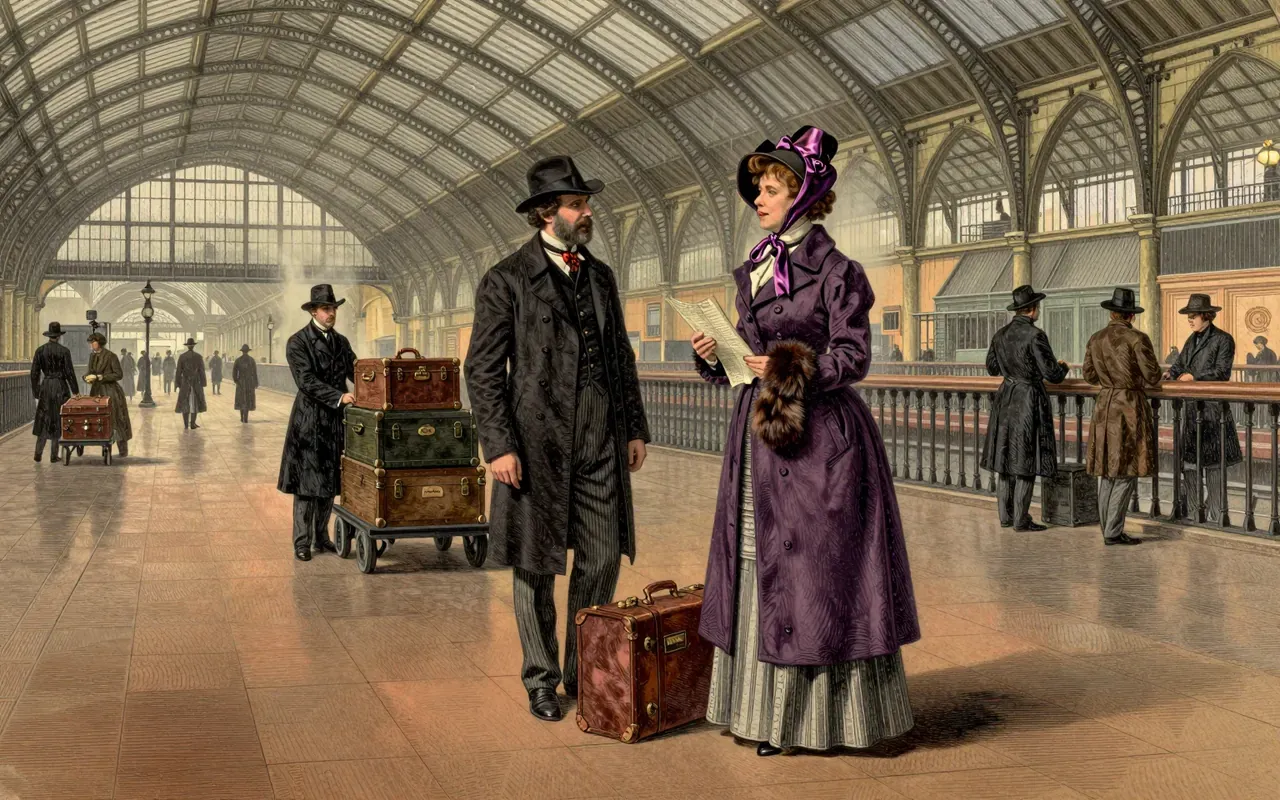
The cucumber sandwich scene exposes class ritual as empty theatre. Lady Bracknell’s interrogation of Jack at Victoria Station reduces identity to bureaucratic absurdity. The final line—‘I’ve now realised for the first time in my life the vital Importance of Being Earnest’—lands because it’s delivered with total conviction about nothing.
What does not
It does not engage with class beyond caricature: Lane the butler speaks only in epigrams, Miss Prism has no inner life beyond her manuscript, and Lady Bracknell’s authority rests on unexamined privilege. The play never asks what happens after the last line.
The themes
The play turns on absurdism, satire, and language. Names override biology, logic, and consequence. Earnestness is inverted: sincerity is punished, deception rewarded, and truth declared ‘rarely pure and never simple’.
Who should read it
Readers who want to see how far linguistic precision can stretch social critique. Anyone studying satire as a weapon against hypocrisy. Students of late-Victorian theatre who need the text’s exact rhythm and timing.
Who should not
Readers seeking psychological depth or moral resolution. Those who require consistent world-building or consequences for deception. Anyone allergic to wit that lands before the setup finishes.
The assessment
The book argues that Victorian social codes are hollow performances sustained by linguistic evasion. It fails as a moral critique because it never tests its characters’ ethics beyond the surface of names and manners. The final revelation—that Jack’s real name is Ernest—resolves nothing but the plot’s wordplay, making earnestness itself a punchline.
Is it worth your time
Yes—if you read it aloud, in one sitting, and stop at the curtain. Its value is performative, not cumulative. It gains nothing from analysis and loses everything when slowed down.