What the book is
A 1862 collection of light verse and classical translations by Charles Stuart Calverley, published anonymously as ‘C. S. C.’. It contains original poems set in Greenwich, Cambridge, and imagined medieval courts, alongside English versions of Horace, Homer, Lucretius, Sophocles and Milton. The front matter notes it is the second edition.
The main ideas
The book argues that Englishness is built on ritualised absurdity—quoits, dog-ownership, college hazing, and Latin exams. It claims mourning should be festive, not funereal, and that gender roles invert under pressure: Sir Hugo kneels, the Lady speaks once, and Spinks refuses marriage on wage grounds. It treats translation as an act of deliberate deflation, not fidelity.
What works
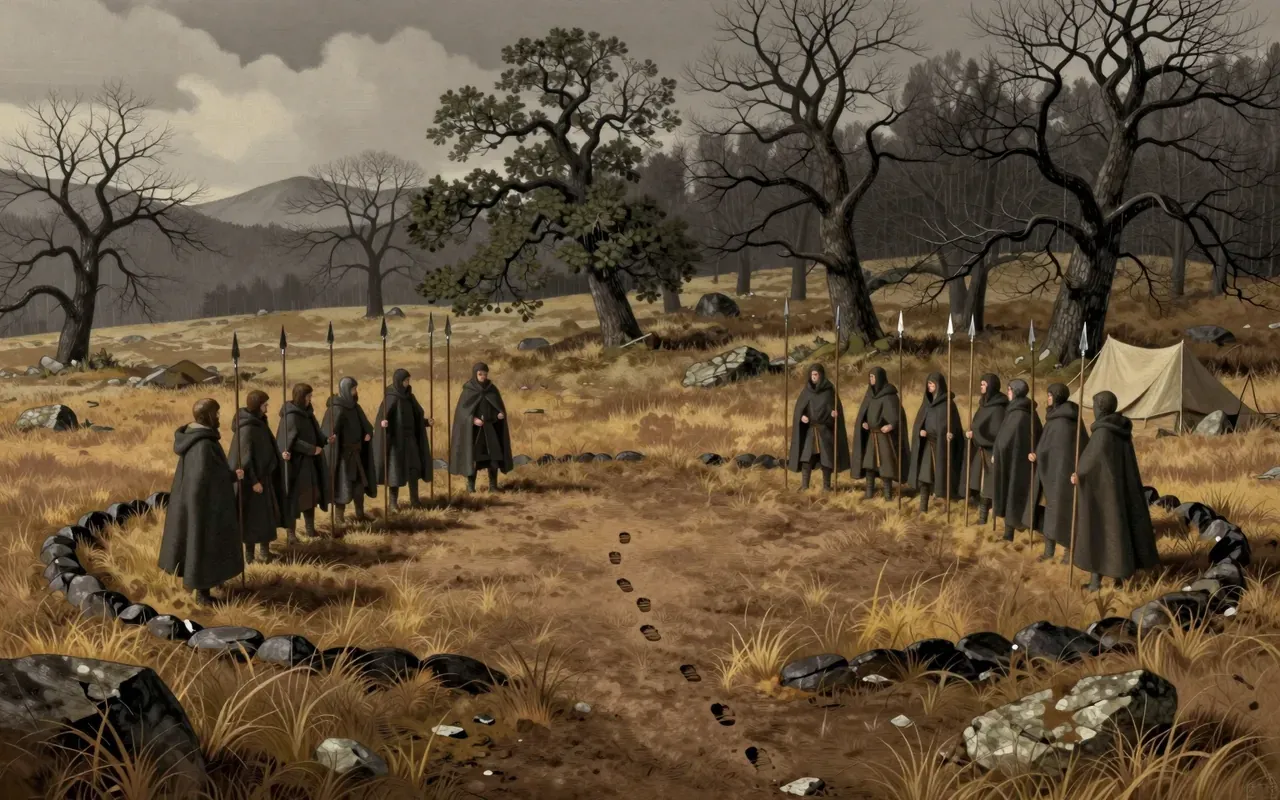
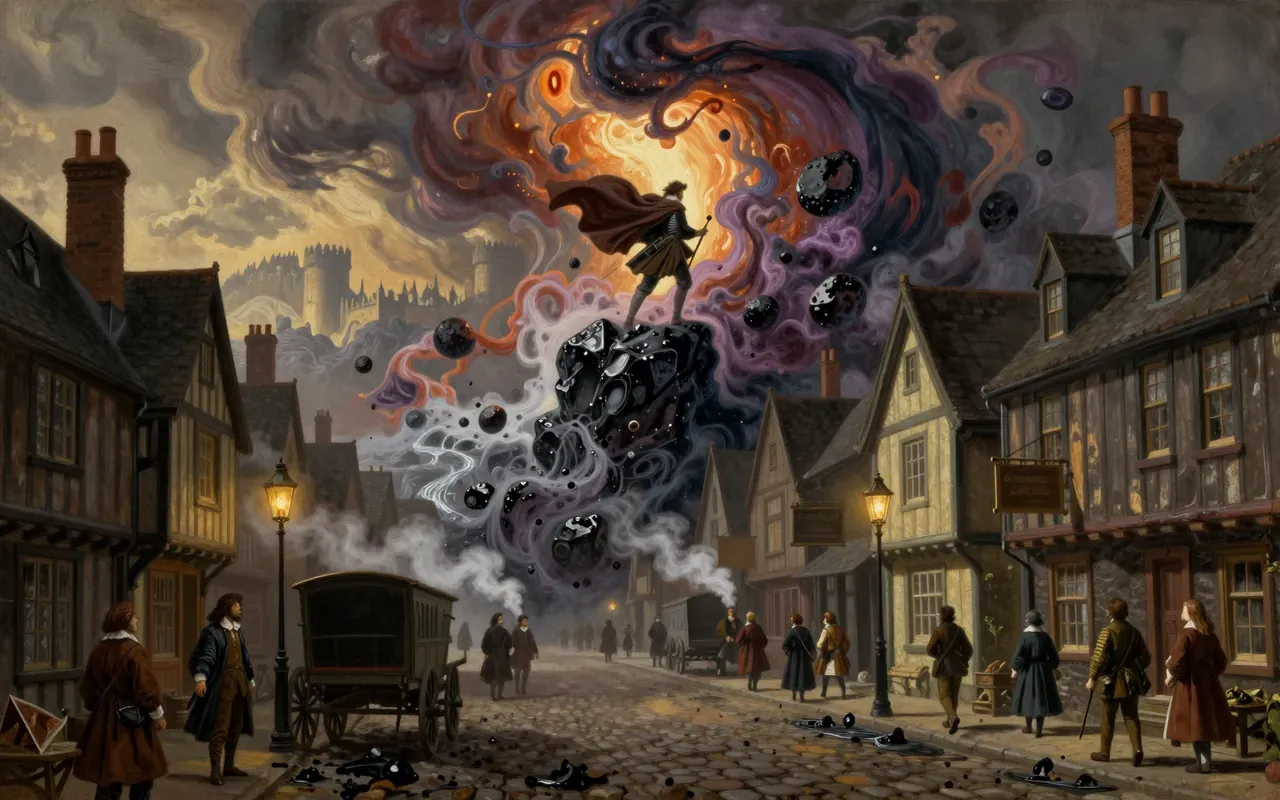
The comic timing in ‘Sikes and Lycidas’ is flawless: a burglar’s stumble triggers chaos, then Milton’s elegy lands like a stone. ‘Town and Gown’ captures Cambridge class violence in eight lines. The May-morning quoit ritual in ‘My First, My Second, My Whole’ builds myth from mud and marbles. The silence after the Lady’s ‘Go for—my second’ lands with physical weight.
What does not
It fails as serious scholarship: the footnotes are sparse and the classical references serve parody, not illumination. It fails as consistent satire: the tonal shifts between slapstick and solemnity feel arbitrary, not architectural. It fails as narrative: there is no through-line, only vignettes strung on a mood.
The themes
The themes are mock-heroism, class performance, and the comic dignity of the ordinary. It returns to ritual—May mornings, banquets for the dead, college gateways—as sites where social order is both enforced and undermined. The recurring motif is transformation: dogs into sacred objects, men into birds, scholars into burglars, Latin into bathos.
Who should read it
Readers who enjoy W. S. Gilbert’s patter songs or Hilaire Belloc’s Cautionary Tales will recognise the rhythm and tone. Anyone studying Victorian parody, undergraduate culture at Cambridge, or the history of light verse needs this volume. It is essential for understanding how mid-Victorians mocked their own institutions without abandoning them.
Who should not
Readers seeking emotional depth, sustained argument or historical accuracy should skip it. Those who require clear authorial stance—whether earnest or ironic—will be frustrated. It offers no biography, no theory, no progression: only juxtaposition, timing, and precision of diction.
The assessment
Calverley’s book is a Victorian joke book disguised as classical scholarship. It treats Latin elegy and English public-school life with equal irony. The translations are technically precise but deliberately flat, mocking both pedantry and poetic grandeur. The original poems stage absurd emotional extremes—tearful reunions with dogs, feathered sleepers, silent ladies who break knights with two words. Nothing here is sincere, and nothing is merely silly.
Is it worth your time
Yes—if you read it in fragments, not cover to cover. Its power lies in the shock of contrast: a tearful woman at Greenwich, then a dogsmeat man pinning a freshman. It rewards rereading single poems, not linear consumption. Skip the scholarly footnotes—they add nothing beyond verification.