booksbriefs
Newest

All briefs

133 briefs · 1784 min · 97–133 on page 2 of 2
14:00

Les Misérables

Victor Hugo · 1862

A fifteen-hundred-page novel set across early nineteenth-century France, from the Paris sewers to the barricades of the July Rebellion. The brief covers Valjean's redemption, the costs of poverty, and why Hugo believed the republic must include the poor.
12:36

Lord of the Flies

William Golding · 1954

Golding's 1954 novel stages what happens when children are left to organize themselves. The surface reads as survival adventure. Below it is a sharp argument about how quickly order becomes tyranny and civilization masks brutality.

12:00

The Lord of the Rings

J.R.R. Tolkien · 1954

Tolkien's trilogy (1954-55) established the modern fantasy epic. The brief covers the quest's architecture, the languages he invented to hold it, and why the appendices might outweigh the text.

15:02

Macbeth

William Shakespeare · 1623

A soldier is told he will be king, kills to make it happen, and narrates his own disintegration in the plainest verse Shakespeare wrote. The brief covers what the witches actually promise, why Lady Macbeth is written out of the second half, and where the play sags.

12:00

Madame Bovary

Gustave Flaubert · 1856

Flaubert's 1856 realist novel set in provincial France. Emma Bovary, educated beyond her station, pursues romantic fantasies that her actual life—marriage to a dull country doctor—can never deliver. The book is about how desire becomes destructive in a world that offers no outlet for it.

12:30

The Master and Margarita

Mikhail Bulgakov · 1967

Bulgakov's 1967 novel, written in secret over a decade and banned until his death, weaves together three narratives. The brief covers the plot in two minutes, the political allegory in three, and why the book survived suppression to become one of the century's definitive critiques of authority.

13:42

The Merchant of Venice

William Shakespeare · 1600

Antonio borrows against a pound of his own flesh, and the court that saves him strips Shylock of his money and his religion. The brief covers the trial, the thin plot surrounding it, and the antisemitism that is not a misreading but the play’s own material.

12:00

The Metamorphosis

Franz Kafka · 1915

Kafka's 1915 novella in seventy pages of exact prose. A man becomes an insect overnight. The story is not about the transformation; it is about what comes after, and what it reveals about work, family, and obligation.

11:00

Moby-Dick

Herman Melville · 1851

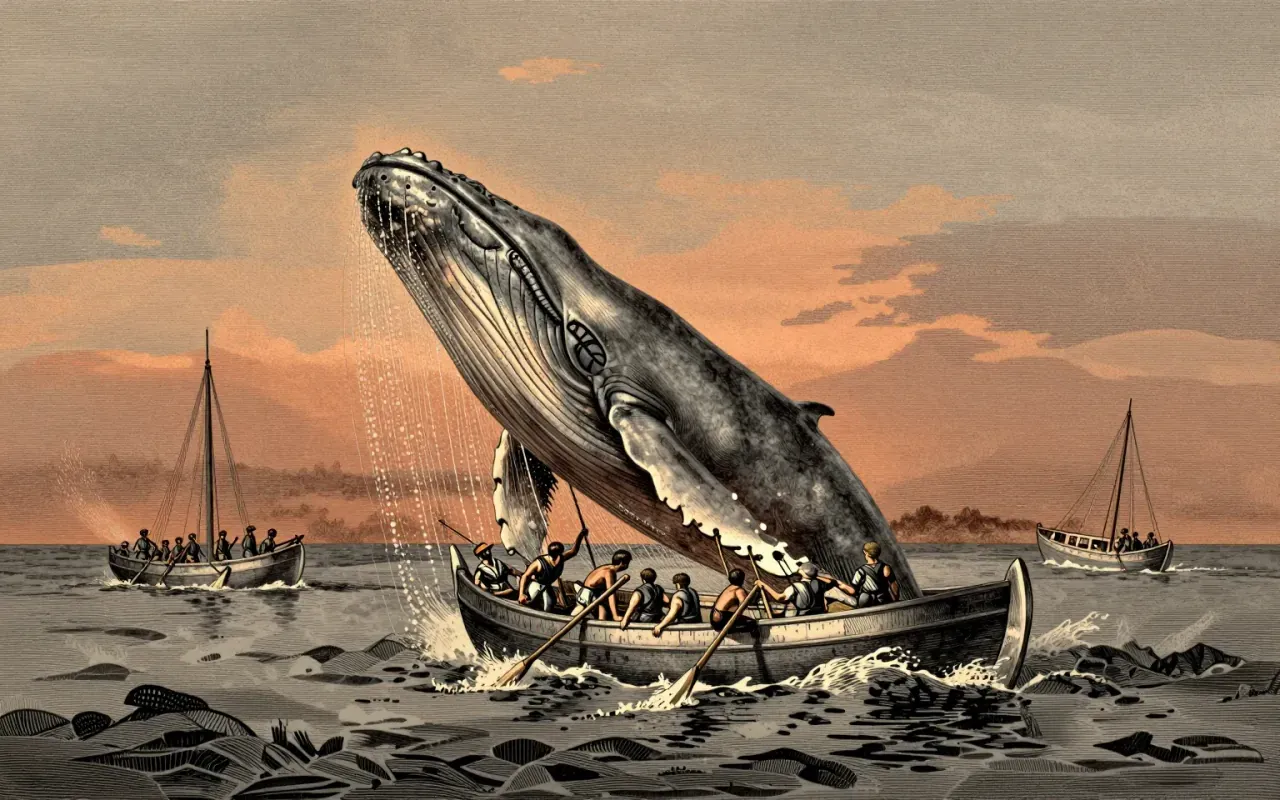
Melville's 1851 whaling epic told from the deck of the Pequod. The brief covers the three days of the chase that end the book, the characters who live it, and why reading only the whale hunt means missing the long argument that precedes it.

12:43

A Modest Proposal

Jonathan Swift · 1729

Swift proposes that the Irish poor sell their infants as food, and costs it out precisely. The brief covers how the satire works, why the numbers matter more than the shock, and the last page where the mask drops and the real proposals appear.

14:13

Much Ado about Nothing

William Shakespeare · 1600

Beatrice and Benedick argue their way into a marriage; Claudio believes a lie about Hero and denounces her at the altar. The brief covers why the comic plot outlives the romantic one, what two words in Act IV do to the play, and how little the villain has to try.

13:00

Neuromancer

William Gibson · 1984

Gibson's 1984 debut defined cyberpunk and coined the term 'cyberspace' before the internet existed. The brief covers the heist plot in five minutes, the AIs in five more, and why everyone building the future still treats this as a founding text.

12:00

Of Mice and Men

John Steinbeck · 1937

Steinbeck's novella in a hundred pages about George and Lennie, migrant workers during the Depression, and what happens when a dream meets the world. The brief covers their plan and why it fails, then the impossible choice at the end.

10:00

The Old Man and the Sea

Ernest Hemingway · 1952

Santiago, an aging Cuban fisherman who hasn't caught anything in 84 days, hooks a giant marlin and fights it for three days. When he finally lands it, sharks strip his prize to a skeleton. Hemingway's spare prose turns the ordeal into a study of human will against indifference.

11:00

One Hundred Years of Solitude

Gabriel García Márquez · 1967

García Márquez's 1967 novel set in the fictional Colombian town of Macondo, where the Buendía family repeats the same names, mistakes, and obsessions across generations. The brief covers the structure of cyclical time, the decay of an isolated settlement, and why the magical elements are not flourish but argument about how the past swallows the present.

12:00

The Picture of Dorian Gray

Oscar Wilde · 1890

Wilde's only novel, 1890, a portrait that ages while its subject remains frozen at twenty-five. The brief covers the pact, the corruption, why the painting becomes the moral record the man refuses to be, and what breaks first.

12:00

The Plague

Albert Camus · 1947

Camus's 1947 novel of collective crisis. It's not really about a plague: it's an essay on solidarity, responsibility, and what keeps you acting when survival makes sense but meaning does not.

14:41

Romeo and Juliet

William Shakespeare · 1597

Two teenagers from feuding families marry in secret and are dead within four days. The brief covers the compression Shakespeare imposes on his source, why Mercutio and the Nurse are the best things in it, and the case that the lovers are less interesting than the people around them.

13:00

Slaughterhouse-Five

Kurt Vonnegut · 1969

Vonnegut's 1969 novel splices autobiography with science fiction to make the firebombing of Dresden absurd instead of tragic. The book moves through time, skipping freely across a life that has already happened, all of it equally real and equally present.

12:00

Snow Crash

Neal Stephenson · 1992

Stephenson's breakthrough novel from 1992 that imagined the metaverse two decades before it became a buzzword. The brief covers the plot in two minutes, the vision in four, and which parts hold up.

15:32

The Tempest

William Shakespeare · 1611

A deposed duke with a monopoly on magic wrecks his enemies’ ship, arranges his daughter’s marriage, forgives everyone and abandons his power. The brief covers what Caliban’s claim does to the story, why a plot with no resistance has no tension, and what the epilogue is asking for.

10:30

To Kill a Mockingbird

Harper Lee · 1960

Lee's 1960 novel follows Scout Finch growing up in Depression-era Alabama as her father Atticus defends a Black man wrongly accused of rape. The trial is rigged, but the book is not about whether he wins—it is about what Scout learns when he loses.

11:00

The Trial

Franz Kafka · 1925

Kafka's unfinished novel about a man arrested without charges and caught in an impenetrable legal system. The brief covers what the trial actually investigates, the machinery of power behind the courts, Kafka's ambivalence about the work itself, and which chapters matter most.

12:00

Ulysses

James Joyce · 1922

Joyce's 1922 novel narrates June 16, 1904 in Dublin through stream-of-consciousness prose and multiple narrative styles. At seven hundred and thirty pages, it has become the prototype for modernist difficulty, rewarding those who engage with its experimental form.

12:35

War and Peace

Leo Tolstoy · 1869

Tolstoy's 1869 epic follows five aristocratic families through twenty years of Russian history. The brief covers the plot in two minutes, the philosophy in five, why the theory of history is the real argument, and which sections actually matter.

12:46

Crime and Punishment

Fyodor Dostoyevsky · 1866

Fyodor Dostoyevsky’s classic follows Raskolnikov, a debt‑ridden student who murders a pawnbroker to prove a theory of extraordinary men. The novel unravels his psychological collapse, the moral backlash, and eventual confession. It offers a brutal study of guilt, class, and redemption, but its sprawling narrative can feel bloated for those seeking a tight thriller.

11:30

The Odyssey

Homer · 650 BC

The Odyssey follows Odysseus on a ten‑year odyssey back to Ithaca, where he must outwit monsters, divine wrath, and a house overrun by suitors. The poem explores fate, hospitality, and cunning, and shows how a hero’s identity is forged by both mortal agency and divine intervention. It remains a foundational myth of Greek culture and a masterclass in epic storytelling.

11:15

Pride and Prejudice

Jane Austen · 1813

Pride and Prejudice is a satirical study of class, courtship and self‑discovery, told through Elizabeth Bennet’s razor‑sharp observations. Austen exposes the hypocrisy of Regency society with brisk dialogue and a tight plot that rewards a quick‑paced reader. The novel’s strengths lie in its memorable characters and social satire; its dated gender expectations and slow pacing may deter modern readers.

12:40

Thinking, Fast and Slow

Daniel Kahneman · 2011

Two systems run your mind. One is fast, intuitive and often wrong; the other is slow, deliberate and lazy. The brief covers both, the three biases you will notice by dinner, and the odd fact that the self who remembers your life is not the one living it.

10:52

Sapiens

Yuval Noah Harari · 2011

Harari's argument is that shared fictions, from gods to money to limited-liability companies, are what let strangers cooperate at scale. The brief covers the three revolutions, the strongest chapter, and the places where historians push back.

8:30

Meditations

Marcus Aurelius · 180

Private notes by a Roman emperor, never meant to be read. The brief explains what Stoicism actually asks of you, which translation to pick, and why the book works better in fragments than front to back.

13:15

The Selfish Gene

Richard Dawkins · 1976

Dawkins reframes natural selection from the gene's point of view and, in one chapter, coins the word meme. The brief covers the gene's-eye view, why the title misleads, and where the argument has been refined since 1976.

6:48

Atomic Habits

James Clear · 2018

Clear's argument fits on an index card, and the brief says so. It covers the four laws, the two ideas that are actually new, and why the book is better than its imitators despite saying less than its length suggests.

9:21

Zero to One

Peter Thiel · 2014

A short, contrarian book built from a Stanford course. The brief covers the monopoly argument, the seven questions every startup should answer, and the parts that read better in 2014 than they do now.

11:04

The Stranger

Albert Camus · 1942

Camus's first novel in a hundred and twenty pages of flat, exact prose. The brief covers the plot in one minute, the absurd in three, and why the trial is the real subject of the book.

14:30

Antifragile

Nassim Nicholas Taleb · 2012

The central idea is real and the book is twice as long as it needs to be. The brief extracts the triad, the barbell, via negativa and skin in the game, then tells you which two hundred pages to skip.

12:58

Dune

Frank Herbert · 1965

Herbert wrote Dune to show what happens when a population gets the hero it wants. The brief covers the ecology, the politics, why the second half is faster than the first, and whether to stop after book one.