booksbriefs
Filter

Worth it in part

Worth it for the parts we point at, not all the way through.

35 briefs · 455 min
13:42

Barren Ground

Ellen Anderson Gholson Glasgow · 1925

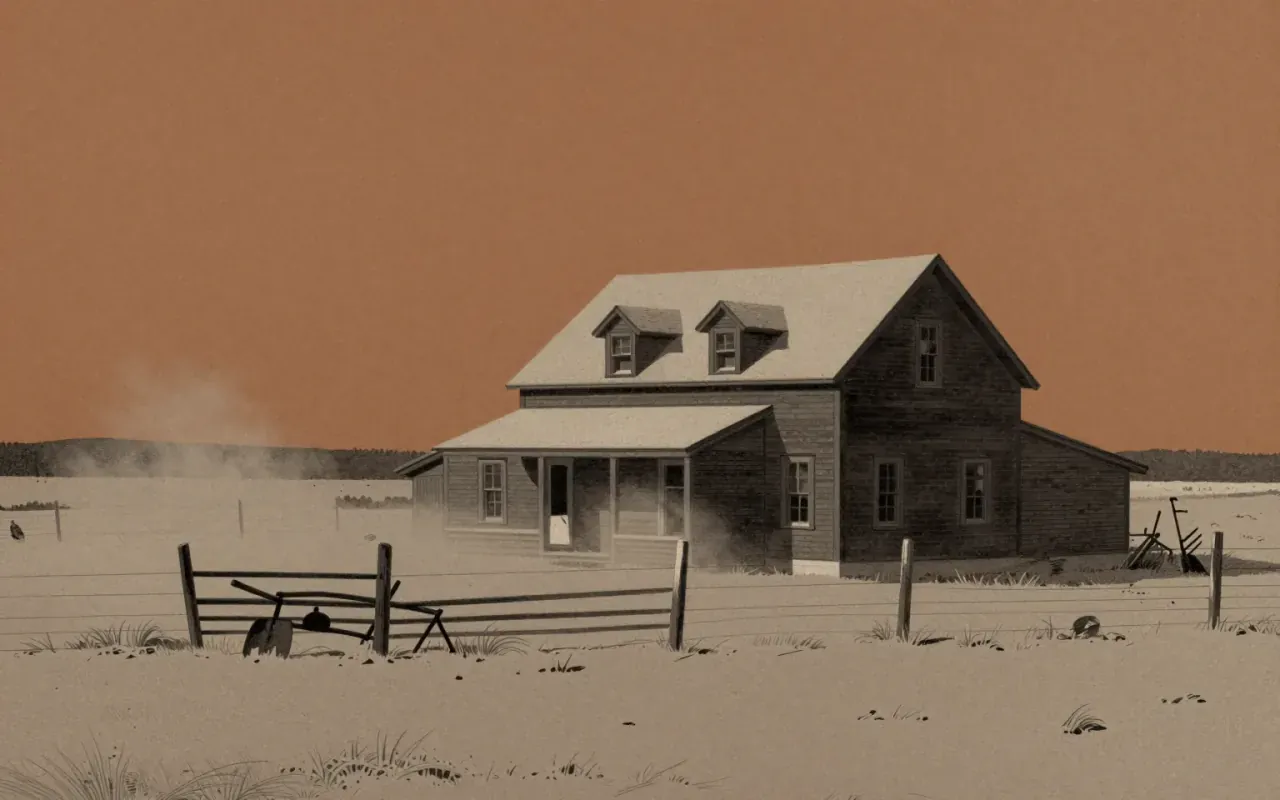
Barren Ground rejects romantic redemption. It follows Dorinda Oakley from betrayed youth to stoic middle age, arguing that endurance—not love—is the land’s only reward. The book’s power lies in its refusal of catharsis: Jason’s ruin is physical erasure, not tragedy; Dorinda’s grief is for love she never had, not love she lost.
12:28

Beyond Good and Evil

Friedrich Wilhelm Nietzsche · 0

The book argues morality is not discovered but created by power, truth is perspectival and life-serving, and nobility arises only where hierarchy is institutionalised. It works best in fragments—especially Chapters IV, V and IX. Skip Chapter VI: its attack on scholars is dated and underdeveloped.

12:46

Bleak House

Charles Dickens · 0

Bleak House is a forensic satire of the Court of Chancery, using the decades-long Jarndyce suit to show how bureaucracy consumes lives. Esther Summerson’s narration grounds its moral force, while Lady Dedlock’s death in snow delivers its final indictment. Skip the preface and the Krook estate subplot—they weaken the argument.

14:48

The Critique of Pure Reason

Immanuel Kant · 1804

Kant’s 1781 critique argues that experience is possible only because the mind structures sensation using innate categories like causality. The brief explains why the Transcendental Deduction is necessary, why noumena are limits not objects, and why the Antinomies expose reason’s self-deception. It tells you which chapters to read, which to skip, and why this book remains unavoidable—not for its answers, but for the questions it forces on every thinker after it.

16:38

Demian

Hermann Hesse · 1919

Demian argues that moral growth requires destroying the world that raised you — family, church, nation — to make space for the self you were meant to be. It succeeds in its early chapters on guilt and awakening, fails in its later mysticism, and should be read selectively. Skip the organist Pistorius entirely.

14:47

The Fortunes and Misfortunes of the Famous Moll Flanders

Daniel Defoe · 1731

Moll Flanders argues that vanity, not poverty, is the root of moral failure — and that redemption requires sorrow for harm done, not just fear of punishment. Its power lies in Moll’s voice: precise, self-deceiving, and relentlessly consequential. Read Parts 1, 2 and 4. Skip the procedural thievery of Part 3.

15:00

The House of the Seven Gables

Nathaniel Hawthorne · 0

The House of the Seven Gables treats inherited sin as physical law: the house breathes, time splits at midnight, and guilt lodges in timber and watch springs. It works best in its claustrophobic, symbolic moments—the dead judge in the chair, the garden door closing, love blooming beside a corpse. Skip the expository Preface summaries. Read Chapters 3, 4 and 6.

13:34

The Interpretation of Dreams

Sigmund Freud · 1939

Freud argues dreams are not nonsense but disguised wish-fulfilments shaped by censorship, infantile memory, and visual translation. He proves it using his own dreams—especially the 'Irma' injection dream—and builds a structural model of the psyche. The brief isolates the core argument, names what works (the manifest/latent distinction), what fails (universal infantile sexuality), and tells you to skip the bibliography.

14:09

Ivanhoe

Walter Scott · 0

Ivanhoe argues chivalry is theatrical cover for Norman tyranny—and that Rebecca’s trial exposes how religion brands Jewish faith as sorcery. It works best in its contrasts: outlaw justice vs Templar fanaticism, Saxon speech vs Norman meat-names. Skip the tournament padding and Athelstane’s farcical resurrection.

15:33

The Mabinogion

Welsh legend didn’t borrow from Arthurian romance — it invented the grammar that made it possible.
13:52

The Robbers

Friedrich Schiller · 1805

The Robbers is a Sturm und Drang tragedy about moral contagion: Francis forges a letter to disinherit his brother Charles, who then joins a robber band. Charles returns to find his father imprisoned, kills Amelia in a final 'sacrifice', and surrenders to justice. The brief isolates the forged letter, the dungeon revelation, and the suicide-sacrifice climax—and tells you which acts to skip.

14:54

Sir Gawain and the Green Knight

Jessie L. Weston · 0

Weston’s 1922 prose version argues Gawain’s flaw is love of life—not lust or cowardice—and that the poem presents chivalry as covenantal, not performative. It clarifies the pentangle’s logic and the girdle’s meaning but sacrifices the poem’s alliterative force. Skip the Preface’s polemics.

11:50

The Song of Hiawatha

Henry Wadsworth Longfellow · 0

Longfellow’s 1855 poem recasts Ojibway oral tradition into a mythic biography of Hiawatha, using Kalevala metre and Romantic moral framing. It works best in its ritual moments—ghosts testing hospitality, Minnehaha’s death, Hiawatha’s departure—but fails as ethnography or theology. Read Chapters I, IV, V and XXII; skip the botanical interludes and explanatory digressions.

13:26

The Song of Roland

Heroism is martyrdom. Loyalty is obedience. Paganism is error — and all three are non-negotiable.
15:50

Steppenwolf

Hermann Hesse · 0

Steppenwolf argues spiritual life demands self-annihilation through laughter—not transcendence. It fails when it abandons Haller’s voice for abstraction. Skip the political despair section. Read the Magic Theatre from the masked ball onward, but stop before Hermine’s command.

14:45

A Study in Scarlet

Arthur Conan Doyle · 1887

A Study in Scarlet invents the consulting detective but splits its energy between Holmes’s method and Jefferson Hope’s Mormon-era revenge. Its Utah section is ideologically loaded and structurally disruptive. Read Part I for Holmes’s debut deduction; skip Part II unless you need motive.

12:50

Wallenstein's Camp

Friedrich Schiller · 1805

A dramatic poem showing soldiers in Wallenstein’s Pilsen camp pledging loyalty not to empire but to their commander. It argues loyalty is performative, collective and born of fear—not ideology or reason. Read it for its raw depiction of martial sovereignty, not for history or character.

12:30

Anna Karenina

Leo Tolstoy · 1878

Tolstoy's 1878 novel follows multiple lives in Russian society—the affair between Anna Afremova and Count Vronsky, alongside Levin's marriage and search for meaning through farming. The book argues that domestic life is not private. Who you are is determined by the society around you, and defying it has a cost.

12:00

Catch-22

Joseph Heller · 1961

Heller's 1961 novel follows Yossarian, whose only escape from deadly bombing runs is to convince a doctor he is mad. The catch: anyone sane enough to ask is sane enough to fly. It is a circular trap, and the book is built to prove it.

12:00

Don Quixote

Miguel de Cervantes · 1605

Cervantes's 1605 novel follows Don Quixote, a minor Spanish nobleman driven mad by chivalric romances who sets out as a knight-errant with his servant Sancho. The brief covers the opening madness and the machinery of the book, what makes it a satire of narrative itself, and which parts can be skipped.

9:15

Frankenstein

Mary Wollstonecraft Shelley · 1818

Frankenstein is a cautionary gothic tale about the perils of unchecked scientific ambition. The novel follows Victor Frankenstein’s obsessive quest to animate life, the creature’s thirst for vengeance, and the moral fallout for all involved. The brief argues the book’s core is a warning about hubris, while pointing out its dated prose and moral ambiguity.

12:30

The Grapes of Wrath

John Steinbeck · 1939

Steinbeck follows the Joad family from Oklahoma to California during the Great Depression. The novel argues that personal survival alone is meaningless; consciousness must shift from individual to collective. Its ending insists that dignity lies in solidarity.

15:00

In Search of Lost Time

Marcel Proust · 1913

Proust's seven-volume masterwork on memory and consciousness, pioneering modernist technique across 3,200 pages. The brief covers the madeleine moment, how time works in the novel, why high society occupies so much space, and which sections actually repay the effort.

14:00

Les Misérables

Victor Hugo · 1862

A fifteen-hundred-page novel set across early nineteenth-century France, from the Paris sewers to the barricades of the July Rebellion. The brief covers Valjean's redemption, the costs of poverty, and why Hugo believed the republic must include the poor.

12:00

The Lord of the Rings

J.R.R. Tolkien · 1954

Tolkien's trilogy (1954-55) established the modern fantasy epic. The brief covers the quest's architecture, the languages he invented to hold it, and why the appendices might outweigh the text.

13:42

The Merchant of Venice

William Shakespeare · 1600

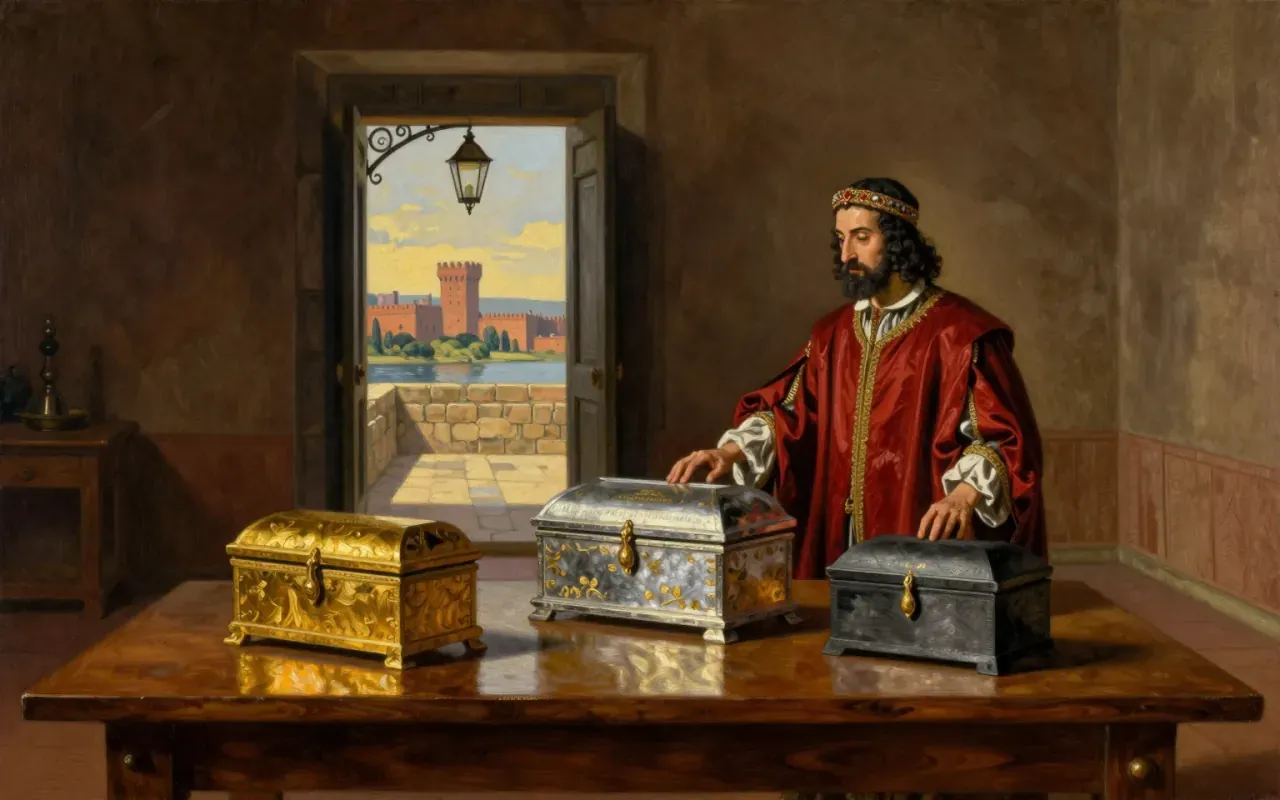
Antonio borrows against a pound of his own flesh, and the court that saves him strips Shylock of his money and his religion. The brief covers the trial, the thin plot surrounding it, and the antisemitism that is not a misreading but the play’s own material.

11:00

Moby-Dick

Herman Melville · 1851

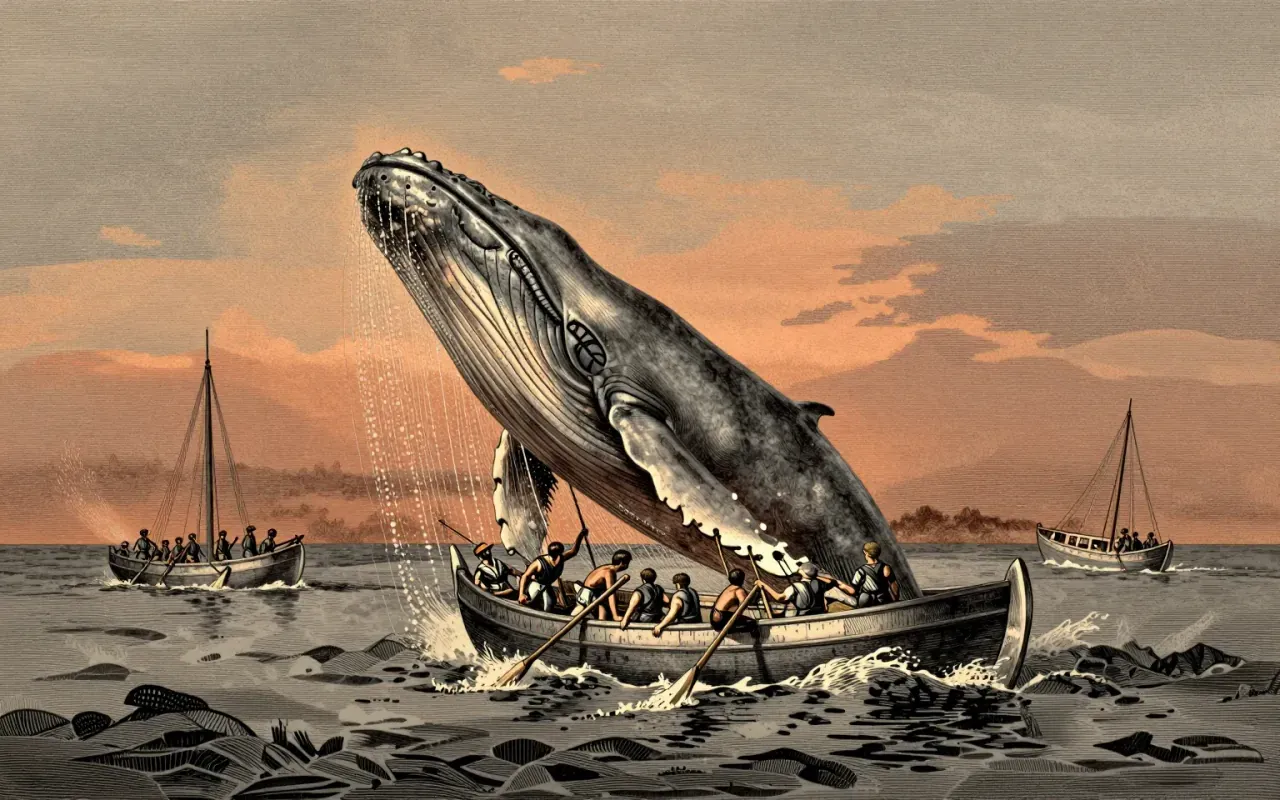
Melville's 1851 whaling epic told from the deck of the Pequod. The brief covers the three days of the chase that end the book, the characters who live it, and why reading only the whale hunt means missing the long argument that precedes it.

10:00

The Old Man and the Sea

Ernest Hemingway · 1952

Santiago, an aging Cuban fisherman who hasn't caught anything in 84 days, hooks a giant marlin and fights it for three days. When he finally lands it, sharks strip his prize to a skeleton. Hemingway's spare prose turns the ordeal into a study of human will against indifference.

12:00

The Plague

Albert Camus · 1947

Camus's 1947 novel of collective crisis. It's not really about a plague: it's an essay on solidarity, responsibility, and what keeps you acting when survival makes sense but meaning does not.

11:00

The Trial

Franz Kafka · 1925

Kafka's unfinished novel about a man arrested without charges and caught in an impenetrable legal system. The brief covers what the trial actually investigates, the machinery of power behind the courts, Kafka's ambivalence about the work itself, and which chapters matter most.

12:00

Ulysses

James Joyce · 1922

Joyce's 1922 novel narrates June 16, 1904 in Dublin through stream-of-consciousness prose and multiple narrative styles. At seven hundred and thirty pages, it has become the prototype for modernist difficulty, rewarding those who engage with its experimental form.

12:35

War and Peace

Leo Tolstoy · 1869

Tolstoy's 1869 epic follows five aristocratic families through twenty years of Russian history. The brief covers the plot in two minutes, the philosophy in five, why the theory of history is the real argument, and which sections actually matter.

10:52

Sapiens

Yuval Noah Harari · 2011

Harari's argument is that shared fictions, from gods to money to limited-liability companies, are what let strangers cooperate at scale. The brief covers the three revolutions, the strongest chapter, and the places where historians push back.

6:48

Atomic Habits

James Clear · 2018

Clear's argument fits on an index card, and the brief says so. It covers the four laws, the two ideas that are actually new, and why the book is better than its imitators despite saying less than its length suggests.

14:30

Antifragile

Nassim Nicholas Taleb · 2012

The central idea is real and the book is twice as long as it needs to be. The brief extracts the triad, the barbell, via negativa and skin in the game, then tells you which two hundred pages to skip.